
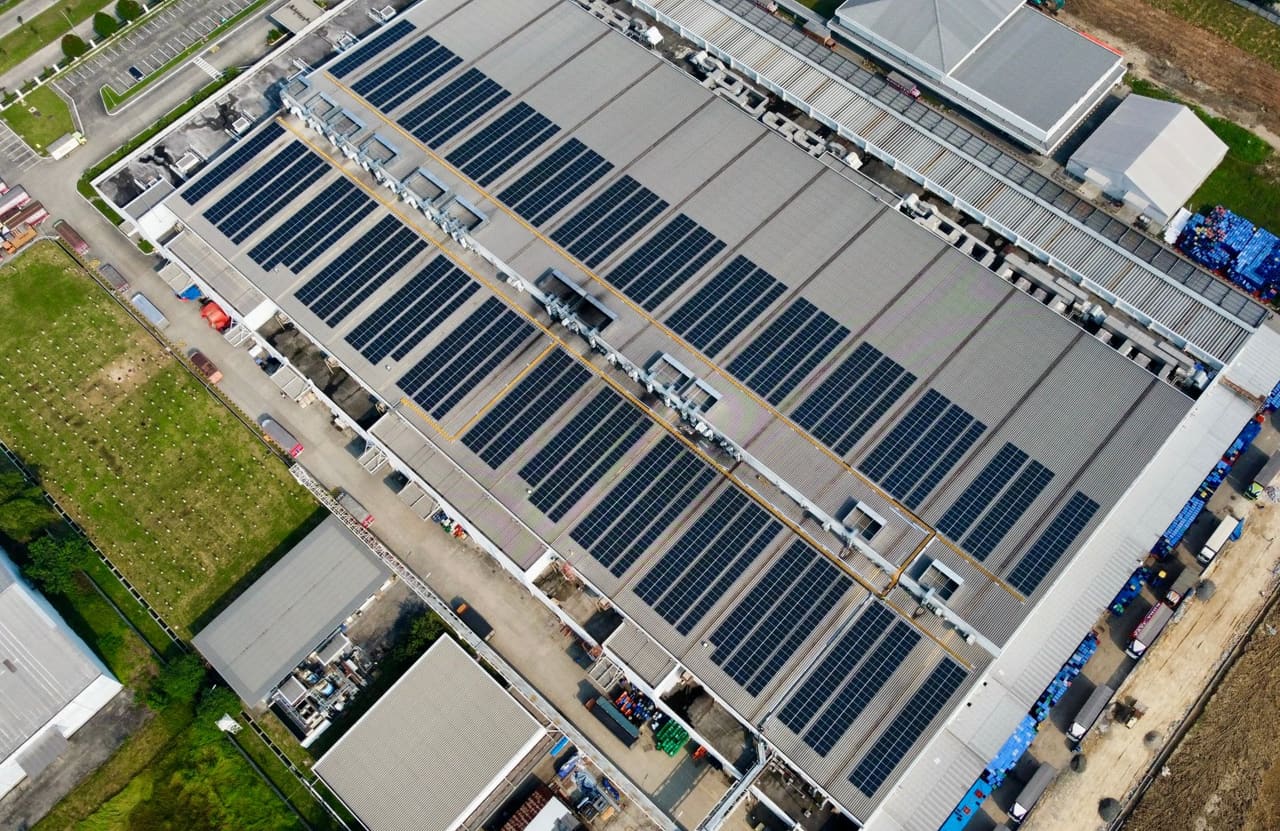
Rooftop solar for factories and buildings.
EPC by our own engineering team, designed around your daytime load, for sites across Indonesia.
- Installed capacity
- 28.5 MWp
- Projects installed
- 187
- Provinces served
- 16
96% of the capacity we have installed is in commercial and industrial projects.
LEIN project SUN Energy · Automotive & components · Banten · 1,350.80 kWp
How solar works for business.
Two simulations: a factory with on-grid rooftop solar and an island resort with an off-grid hybrid system.
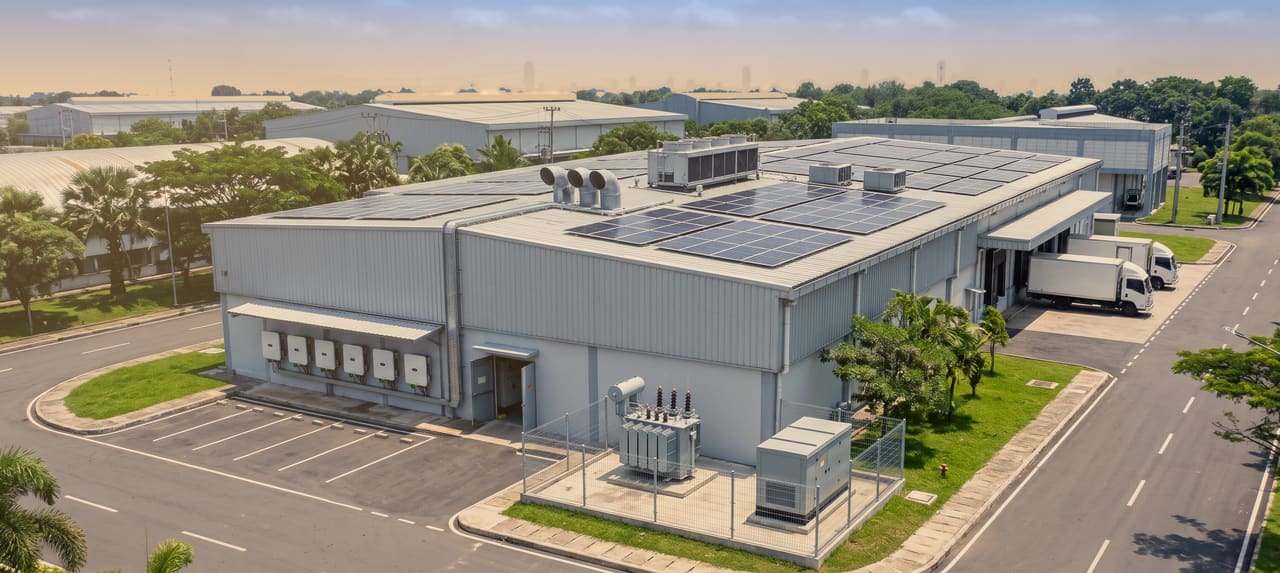
MW figures are a simulation: a 24-hour factory on three shifts with a working-day load of about 5 MW and 2.8 MWp of on-grid rooftop solar with zero export. Solar output is scaled from LEIN system data for a clear day. In the simulation, the diesel genset is sized at about 130% of the PLN connection and can run for up to about 6 hours, so the whole load keeps running during an outage. Image: illustration, not a LEIN project.
Figures are a LEIN simulation of an island resort in eastern Indonesia without PLN, using about 40 kW day and night, with 220 kWp of solar, a 720 kWh battery (BESS), a 100 kVA diesel genset and an energy management system (EMS). Solar output follows LEIN’s energy model for a clear day; a cloudy day gives 30% of that and a rainy day 10%. Over a simulated year, the genset alone would use about 119,000 litres of diesel; with solar and the BESS, about 10,000 to 29,000 litres, depending on solar output, BESS cooling and BESS ageing. Image: illustration, not a LEIN project.
Sized to your daytime load
On a working day the panels produce less than the factory uses, so every kilowatt-hour is used on site.
Zero export
On holidays, the inverters limit output to what the building uses. Since Minister of Energy and Mineral Resources Regulation No. 2 of 2024, power exported to PLN no longer reduces the bill.
When PLN goes down
An interlock contactor disconnects the inverters, and the building’s diesel genset, if it has one, takes over the load.
For factories and commercial buildings, we design the system around your daytime use and your PLN bills.
Get A Quote (opens another website)75–90% less diesel
LEIN simulation for an island resort in eastern Indonesia, compared with running the genset alone: fewer fuel deliveries by boat and quieter nights.
For resorts and sites without PLN, we design off-grid hybrid systems around your daily load profile and your genset.
What we do.
From your first PLN bills to a running, monitored system.
On-grid rooftop solar
For factories, warehouses, offices, malls, apartments, hospitals and campuses. Sized to your daytime load, with zero export to PLN.
How a project runsEPC for solar developers
Design, procurement, installation and commissioning of rooftop systems for solar developers, plus the surveys and studies behind their tenders.
Engineering servicesOff-grid hybrid design
For resorts and sites without PLN: solar panels, a battery energy storage system (BESS), your diesel genset and an energy management system (EMS).
Off-grid hybridOperation & maintenance
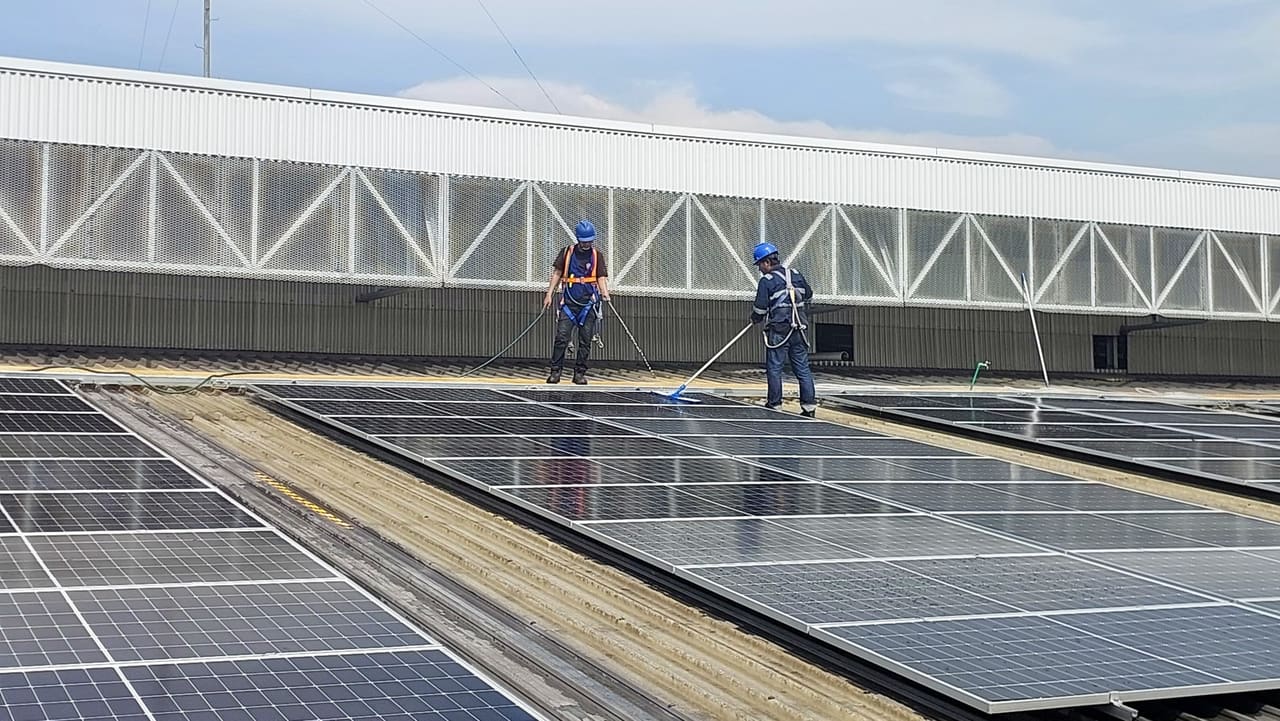
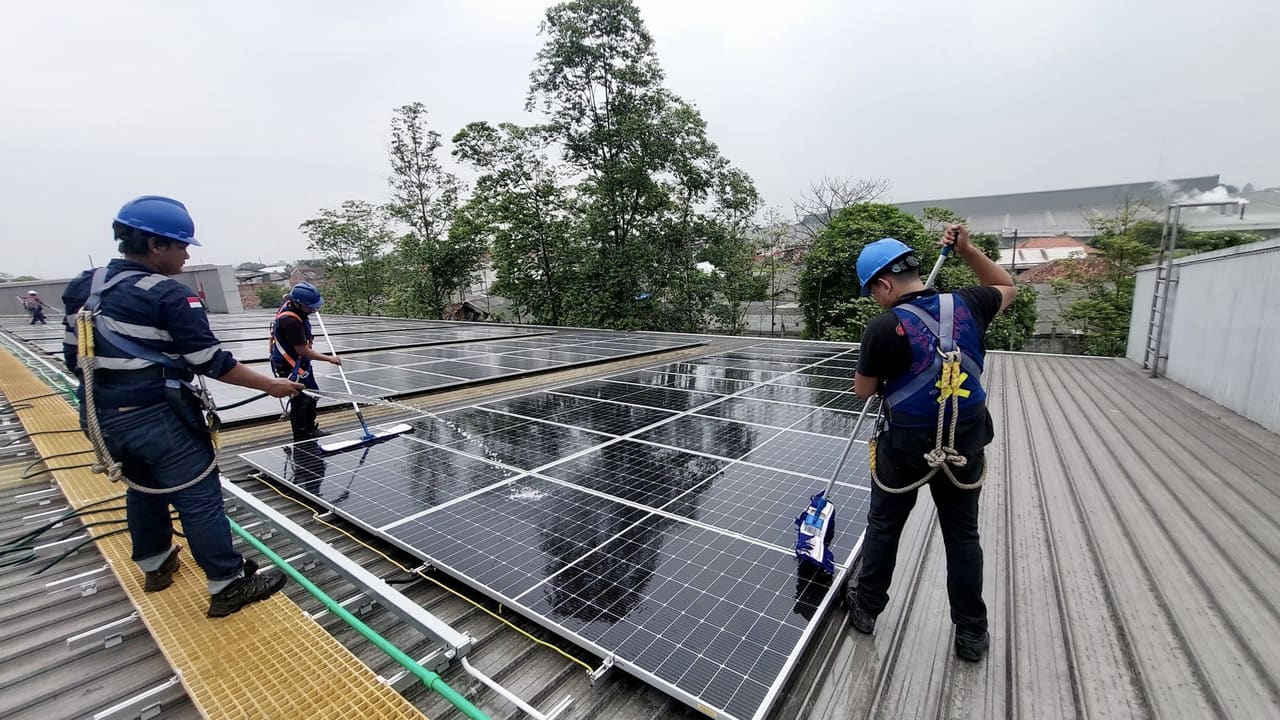
Preventive and corrective maintenance, including panel cleaning, with monitoring registered in your company’s name.
Maintenance
Sectors we have built for
- Textiles & garments6.2 MWp6 projects
- Rubber & plastics5.5 MWp6 projects
- Food, beverages & agribusiness5.2 MWp26 projects
- Materials & building products3.6 MWp4 projects
- Retail, offices & hospitality2.1 MWp11 projects
- Automotive & components1.8 MWp10 projects
- Mining, oil & gas, energy1.4 MWp16 projects
- Logistics & warehousing0.8 MWp1 project
- Wood & furniture0.6 MWp3 projects
- Institutions, education & public sector0.4 MWp12 projects
LEIN portfolio data as of 28 October 2026. The ring around each icon shows the sector’s share of total installed capacity. Capacity rounded to 0.1 MWp.
Benefits beyond profit.
Why solar power for your business? Lower costs come first, but they are not the only return.
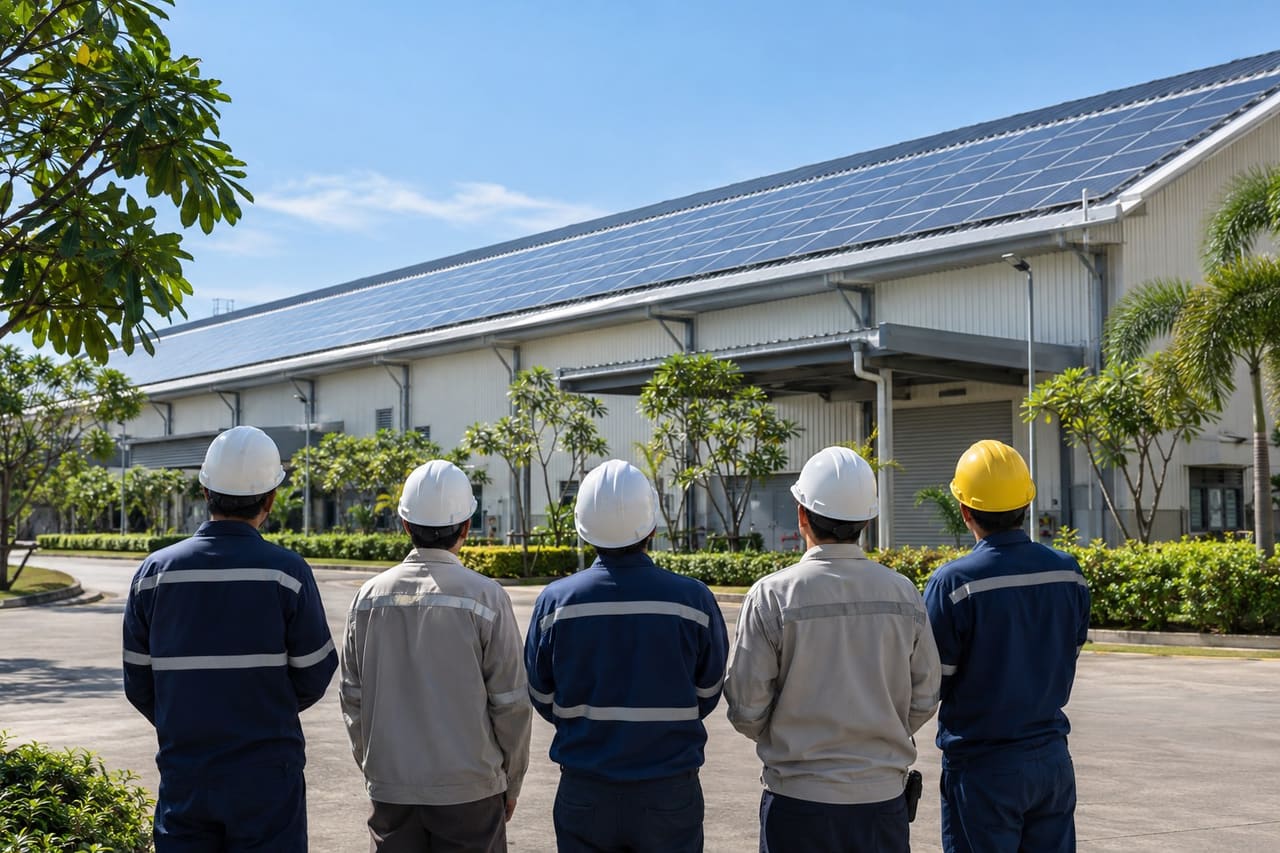
For your RE100 and ESG targets
Some of the factories we build for install solar because their principals or overseas buyers ask them to. Here is what a rooftop system gives your sustainability team.
Counts towards RE100
Under the RE100 technical criteria, a rooftop system your company owns counts as self-generation, and one a third party owns on your site counts as an on-site power purchase agreement (PPA). Neither needs energy attribute certificates (EACs) to be cancelled, as long as no certificates from the system are sold to anyone else. Local regulations still apply.
Data for your ESG reports
Download your monthly production from the monitoring app whenever you need it, ready for your ESG reports and your buyers’ sustainability questionnaires.
See the monitoring app
Supports SDG 7 and SDG 13



Clean power from your own roof contributes to Sustainable Development Goal 7, Affordable and Clean Energy, and Goal 13, Climate Action.
Less diesel. More sun.
Resorts, islands and remote sites often run on diesel gensets day and night. We design off-grid hybrid systems that let the sun carry most of the load: solar panels, a battery energy storage system (BESS), your diesel genset and an energy management system (EMS) that runs them together.
75–90% less diesel
LEIN simulation for an island resort in eastern Indonesia, compared with running the genset alone: fewer fuel deliveries by boat and quieter nights.
In the same simulation, the genset alone would use about 119,000 litres of diesel a year; with solar and the BESS, about 10,000 to 29,000 litres.
What we design
- Load profile
- Day and night use, from your genset logs or a load measurement.
- Solar and BESS sizing
- Enough for the nights and for cloudy days, with the genset as backup.
- EMS settings
- When the genset starts and stops, and the BESS reserve it protects.
- Genset integration
- Your existing genset stays in the system as the backup and runs far less.
To size a system, send us
- Monthly diesel use, in litres
- Genset size (kVA) and running hours
- Day and night load, or genset log sheets
- Land or roof area available for panels
Engineering & feasibility studies.
Solar developers, consultants and building owners also hire our engineering team for the work before a project: paid site surveys, detailed engineering design (DED) for tenders, and feasibility studies.
250+ MWpof feasibility studies across almost every region of Indonesia, including remote areas
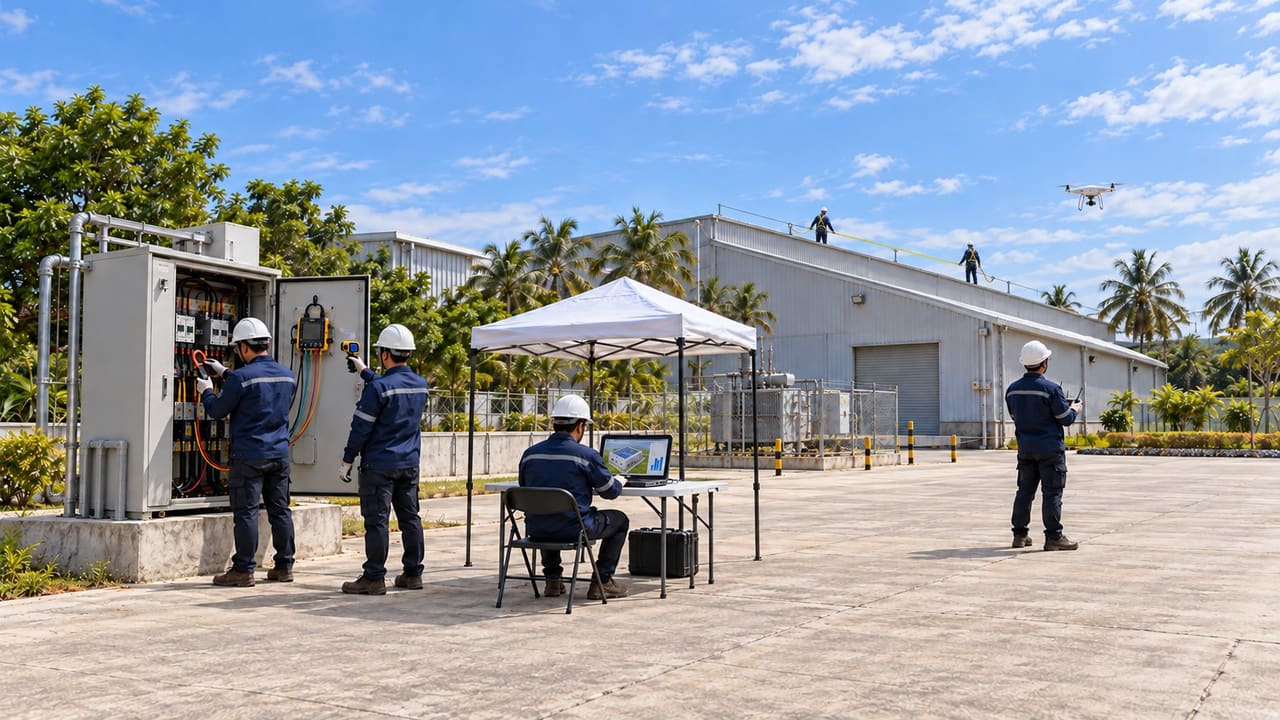
Paid site survey
Roof, electrical rooms and connection point, documented on site with photos and measurements.
Survey report
Findings, photos, constraints and recommendations, ready for your design or tender.
Load measurement with a PQA
A power quality analyser logs the actual load profile, so the system is sized to measured data.
DED, PVsyst and SketchUp
Detailed engineering design, energy yield simulation in PVsyst and 3D layouts in SketchUp.
Harmonic and power factor analysis
Studies of harmonics and power factor, with ETAP modelling of the electrical system.
Bill of materials
A complete BoM for procurement or tenders, from modules and inverters to cables and protection.
How a project runs.
Seven stages from first data to a running system, with one LEIN team from start to finish.
Introduction
We ask for initial data (PLN bills and roof details), introduce LEIN and give a first estimate of your savings.
Feasibility study
A free online survey with simulation software, then a site visit arranged with you. We analyse the load profile and prepare a preliminary design.
Proposal
A proposal with the savings calculation, product options and a price quotation.
Detailed engineering
The final design and specifications the contract is based on.
Contract
The EPC contract is signed and material procurement begins.
Project execution
Kick-off meeting, scheduling, installation, testing and commissioning.
about 20 weeks from contractSee the typical timeline
Operation & maintenance
The system runs and is monitored in your name; we provide preventive and corrective maintenance, including panel cleaning.
Typical project timeline
For commercial and industrial rooftop solar, a project takes about 20 weeks from contract to testing and commissioning. Procurement starts in week 2 while design is still under way, and the mounting structure goes up as soon as its materials arrive. PLN approval follows the rooftop solar quota for your area and PLN’s application periods, so it can take longer when the quota is full.
20 weeks from contract to testing and commissioning
- EPC contract, start of week 1
- Survey & design2 weeks
- Procurement
- Balance of system (BoS)4 weeks
- Solar panels8 weeks
- Inverters8 weeks
- Material delivery
- Balance of system (BoS)1 week
- Solar panels2 weeks
- Inverters2 weeks
- Installation
- Mounting structure8 weeks
- Solar panels8 weeks
- Cabling4 weeks
- LV and distribution boards2 weeks
- Inverters2 weeks
- Earthing2 weeks
- Testing & commissioning1 week
Procurement and delivery times depend on material availability and customs clearance.
Installation time depends on the weather. Connection to the building’s main distribution board follows the building’s schedule (about 1 day).
Typical schedule; every project’s timeline may differ.
Built for your roof.
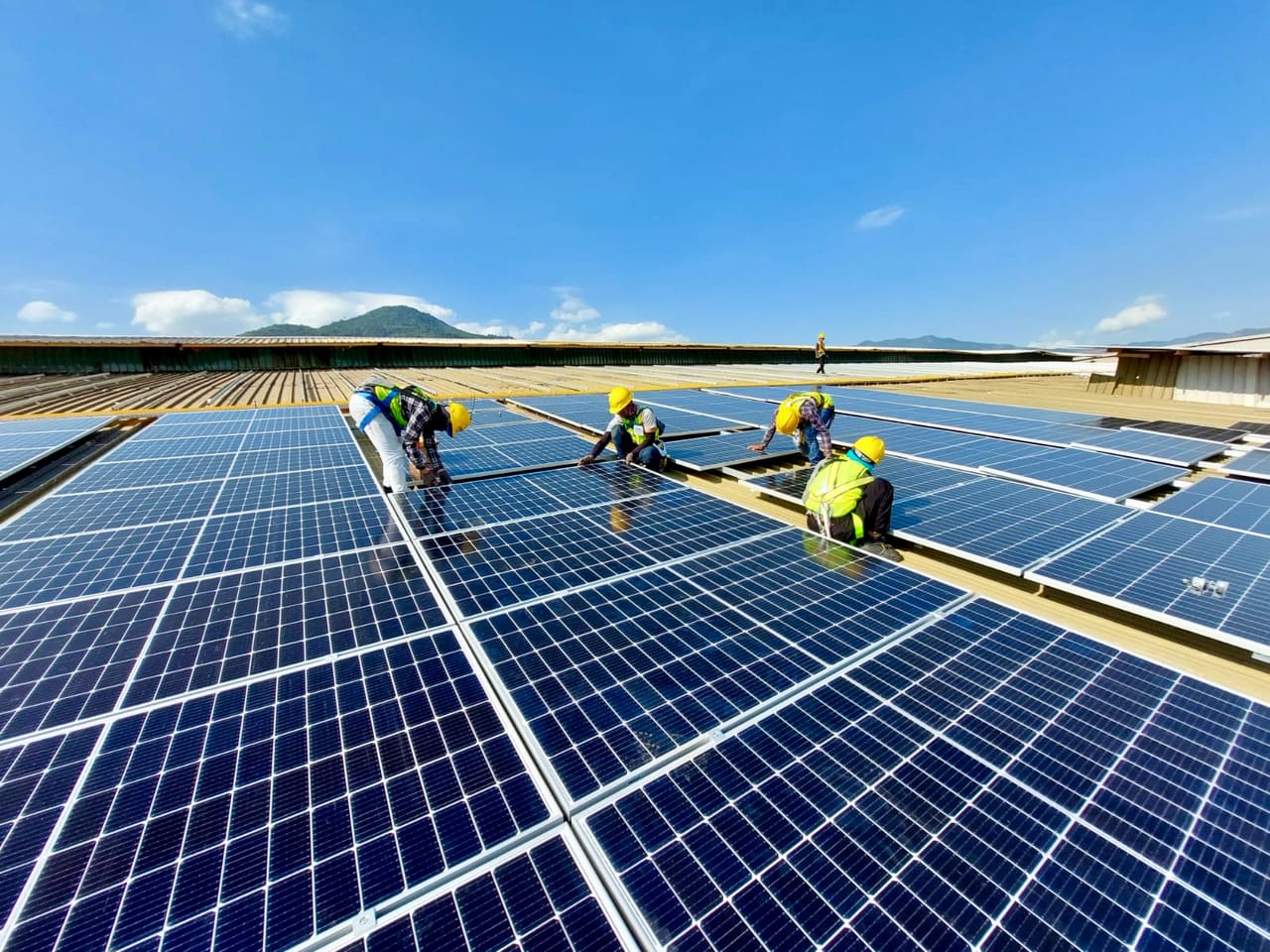
Each roof type has its own mounting method, the same one we specify in our proposals. On metal and tile roofs either the roof is not drilled at all or every fixing point is sealed; on concrete decks the method follows the wind load and the deck’s capacity. Without a suitable roof, a solar carport puts the panels over the car park.
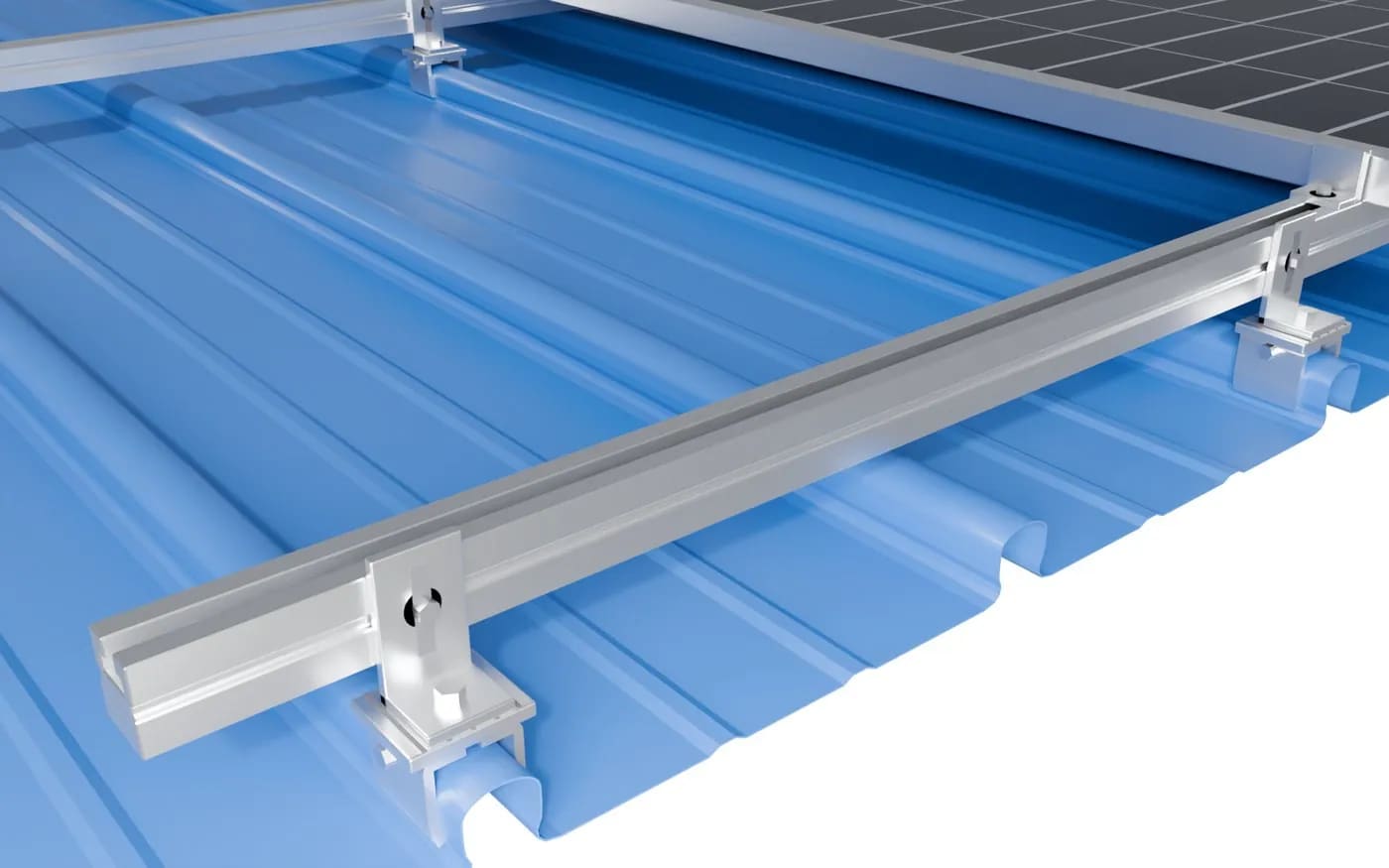
Klip-Lok clamp
Klip-Lok / standing-seam metal roof
Aluminium clamps grip the roof seam; an L-foot is bolted on each clamp and the rail is bolted to its side — no holes in the roof sheet.
- Non-penetrating: the roof stays watertight as built
- Clamps torqued to specification; wind-load rated
- Anodised aluminium rails, stainless-steel mid/end clamps
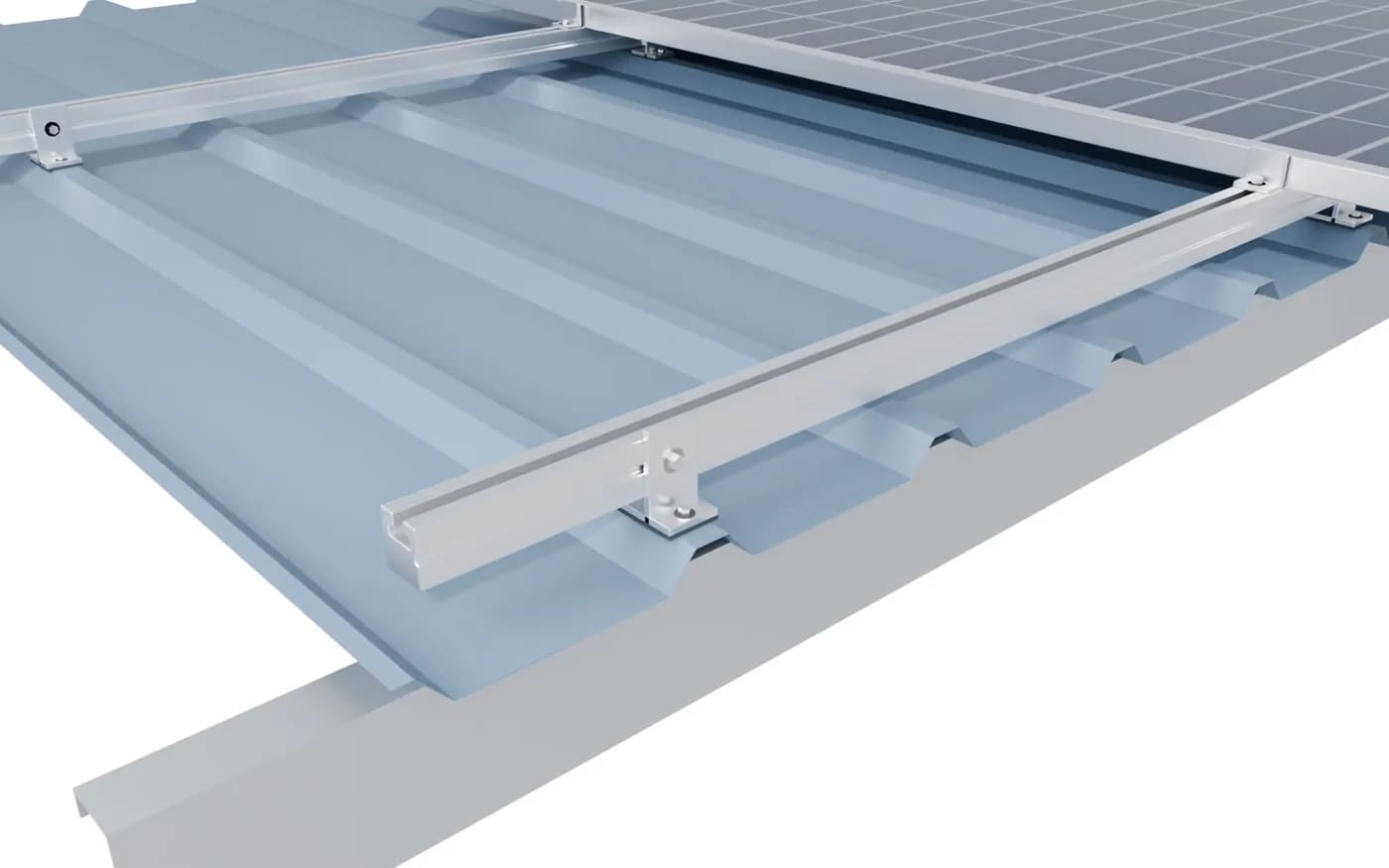
L-feet
Metal deck (spandek) / uPVC sheet
Aluminium L-feet sit on the rib crests, each fixed to the purlin with one self-drilling screw + EPDM washer; rails sit on the L-feet.
- One screw per L-foot on the rib crest, with EPDM washer + sealant at every point
- L-feet spacing per wind-load and purlin-span calculation
- Anodised aluminium rails, stainless-steel fasteners
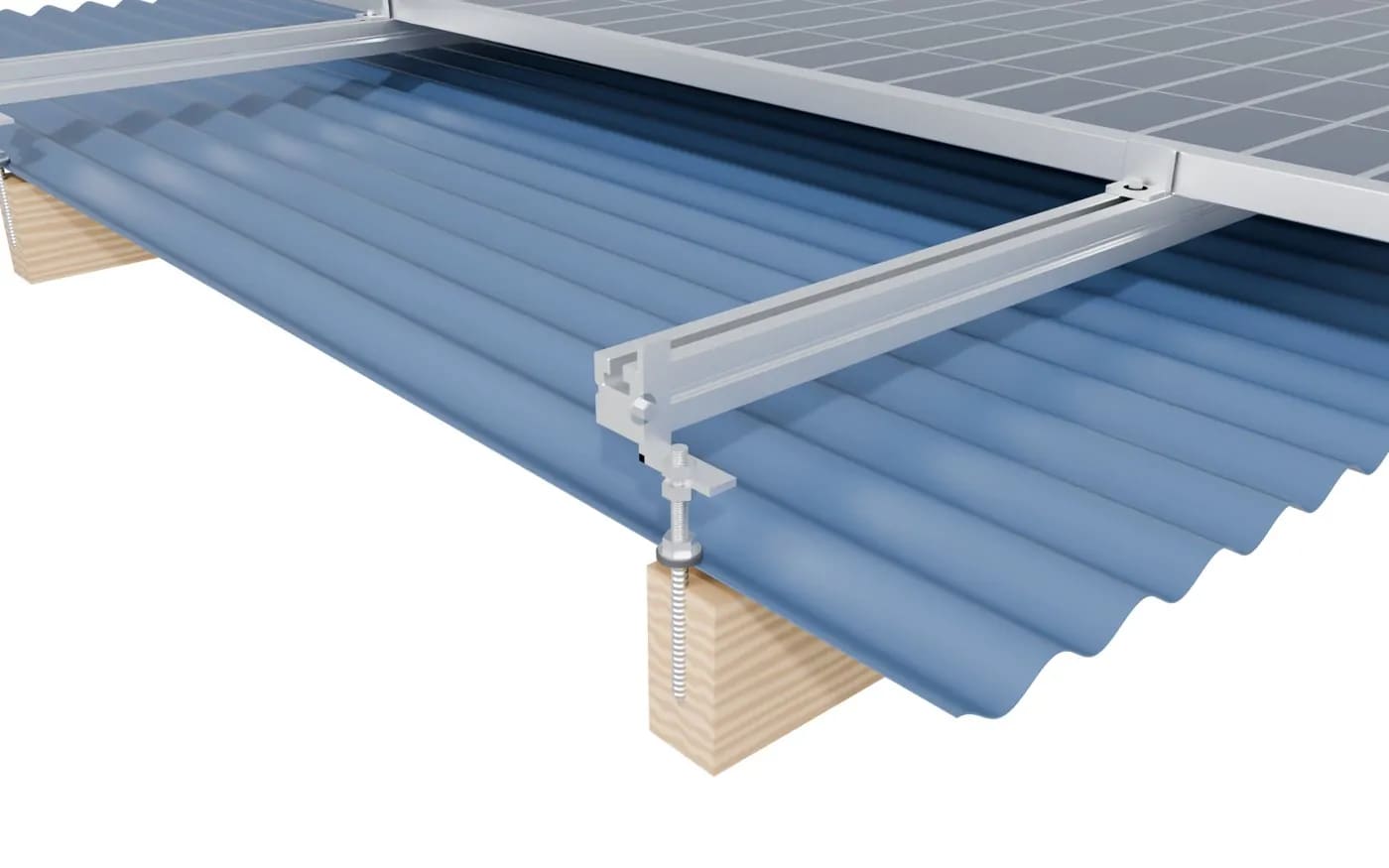
Hanger bolt
Corrugated zinc / uPVC sheet (timber purlins)
Stainless hanger bolts are screwed through the corrugation crest into the timber purlin; an EPDM washer and nut seal the penetration, and an aluminium L adapter on the bolt’s upper thread carries the rail.
- Bolts on the crest with EPDM washer + sealant at every point
- Adapter height adjusts on the thread to level the rails
- Anodised aluminium rails, stainless-steel bolts and nuts
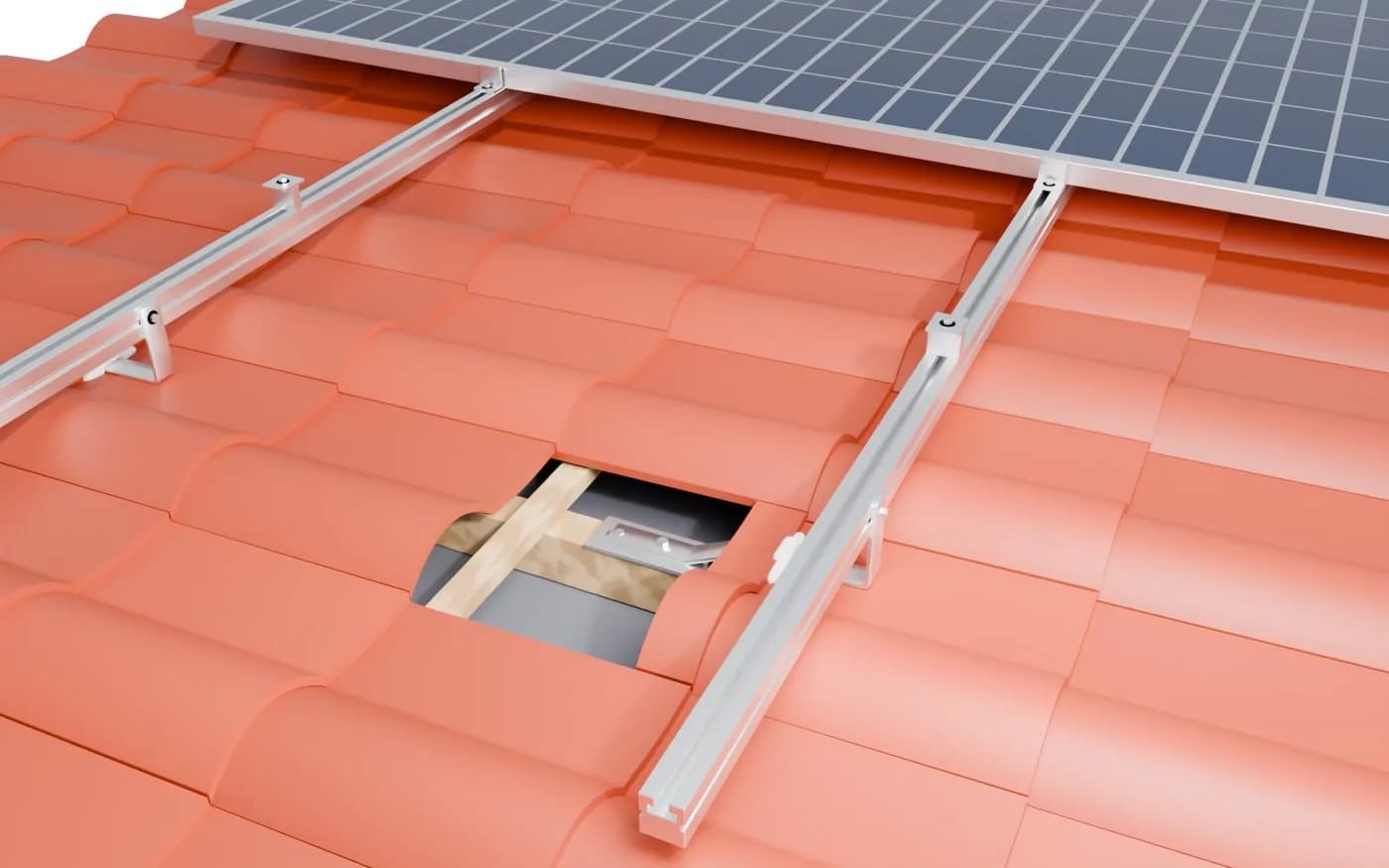
Tile roof hook
Clay / concrete tiles
Aluminium hooks are screwed to the rafters or trusses (timber or light steel) — never to the battens — with stainless-steel screws and bolts; tiles are refitted over the hooks and the rail is bolted to the side of each hook’s upright.
- No holes in the tiles: water keeps running over the tiles
- Silicone sealant at every point where a hook comes out over the tiles
- Tiles cracked during the works are replaced by LEIN
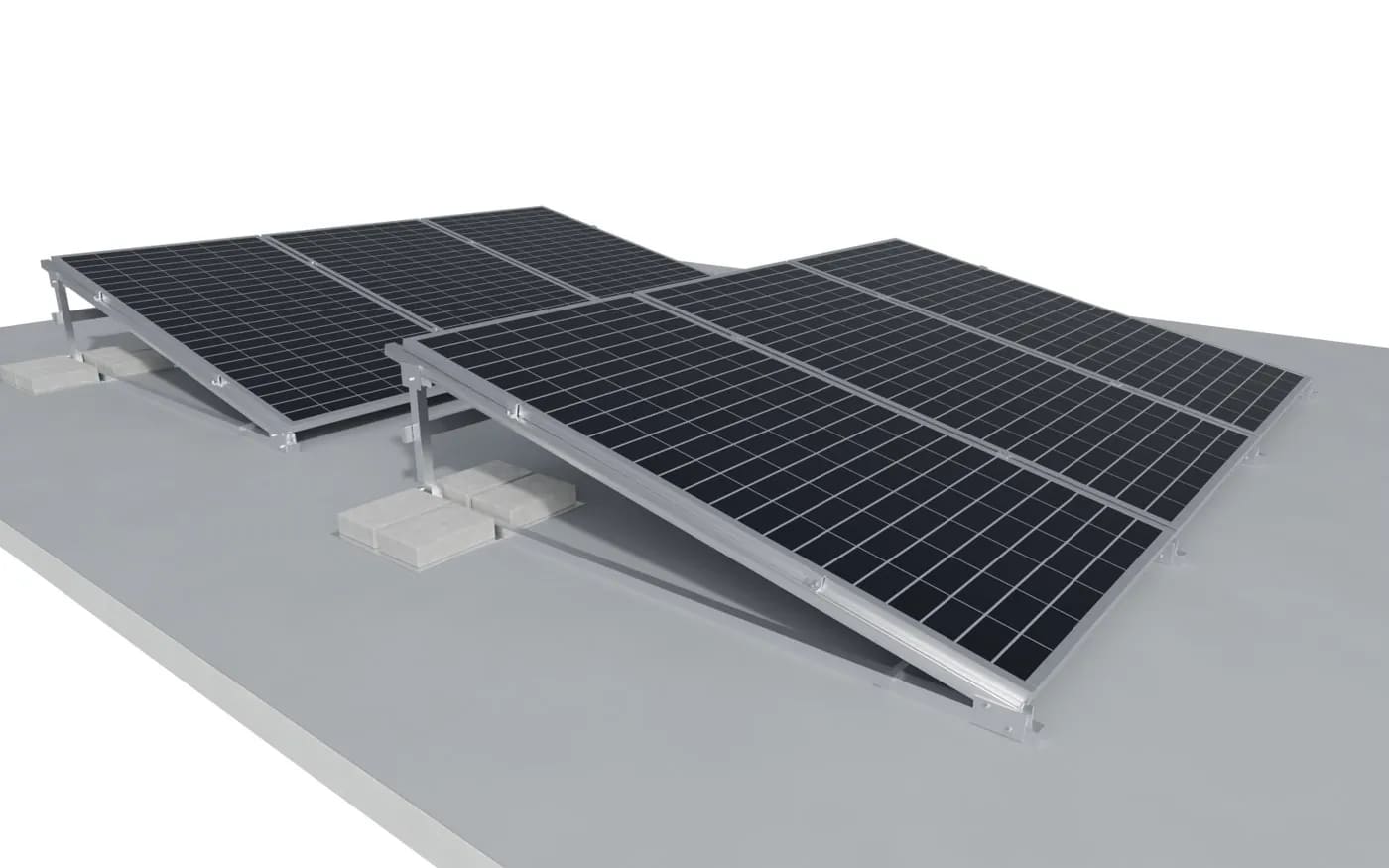
Ballast (concrete blocks)
Concrete flat roof
A triangular 10–15° aluminium frame rests on the deck and is held down by concrete ballast blocks on both sides of the base rail — the deck is not drilled.
- Ballast weight calculated against site wind load and deck load capacity
- Blocks sit on aluminium trays fixed to the frame, on both sides of the base rail
- Maintenance walkways between module rows
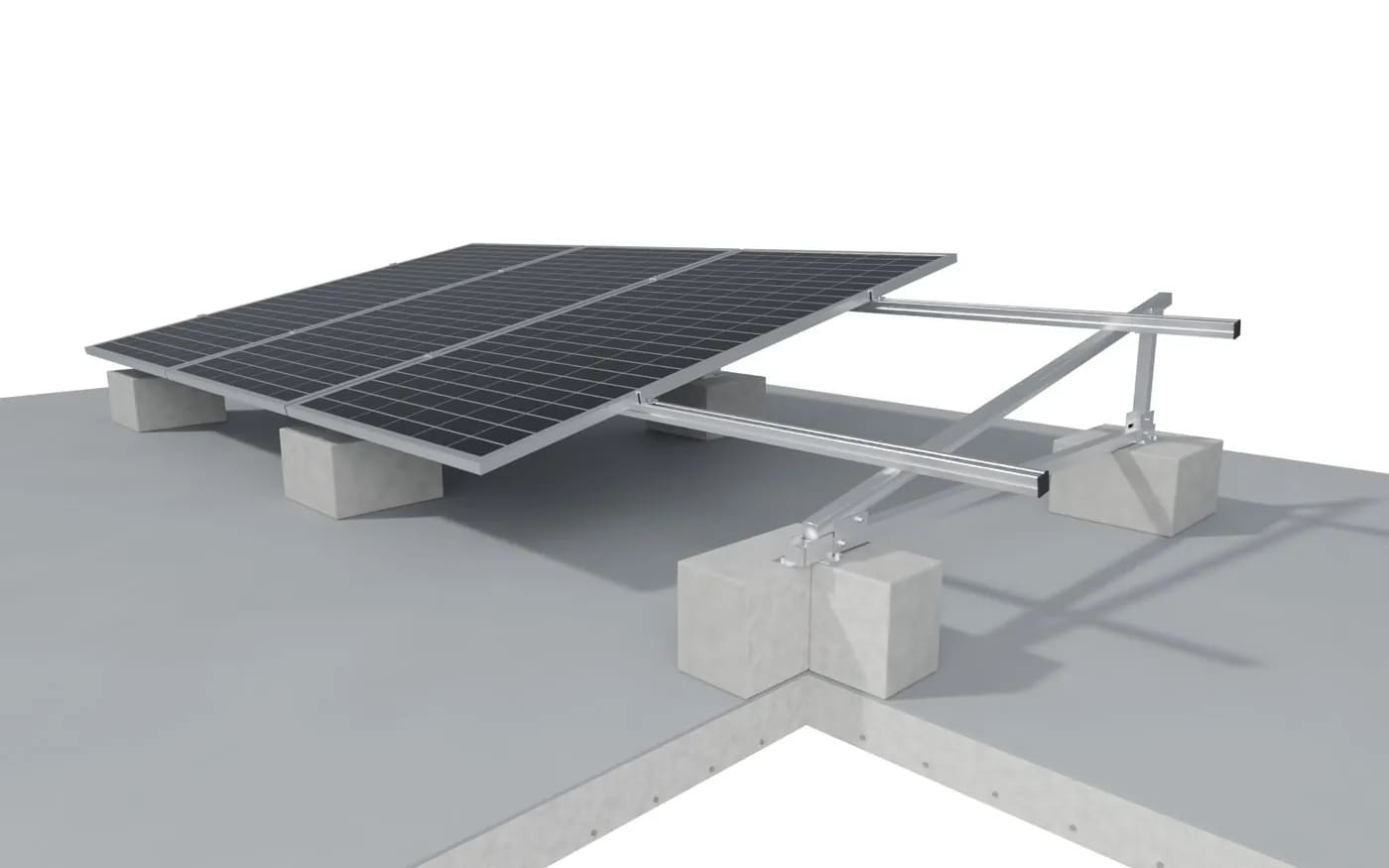
Ground-mounted (concrete pedestals, no drilling)
Concrete flat roof
Concrete pedestals are cast directly on the deck without drilling; the 10–15° aluminium frame is bolted to the pedestals, whose weight holds it against the wind.
- Pedestal size and weight calculated against site wind load and deck load capacity
- Deck not drilled: the waterproofing under the pedestals stays intact
- Modules sit higher above the deck, leaving more room for cleaning and drainage underneath
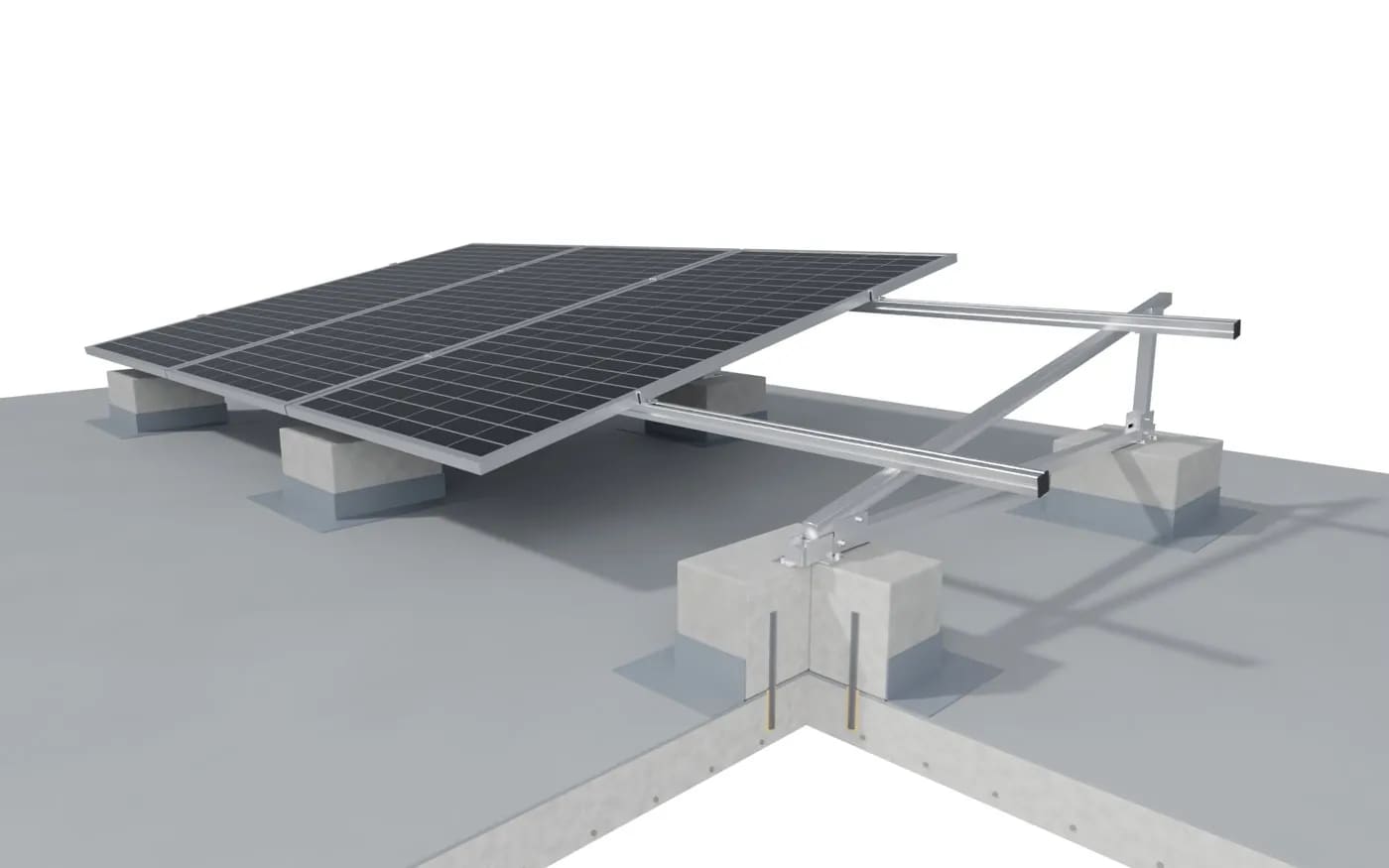
Ground-mounted (concrete pedestals + chemical anchors)
Concrete flat roof
Concrete pedestals are tied to the deck slab with chemical anchors — rods in drilled holes filled with epoxy; the 10–15° aluminium frame is bolted to the pedestals and the waterproofing is recoated around them.
- Strongest hold in high winds — suited to tall or exposed decks
- Drilling depth and number of anchors follow the slab thickness and wind load
- Drilled holes are filled with epoxy and covered by the new waterproofing coat
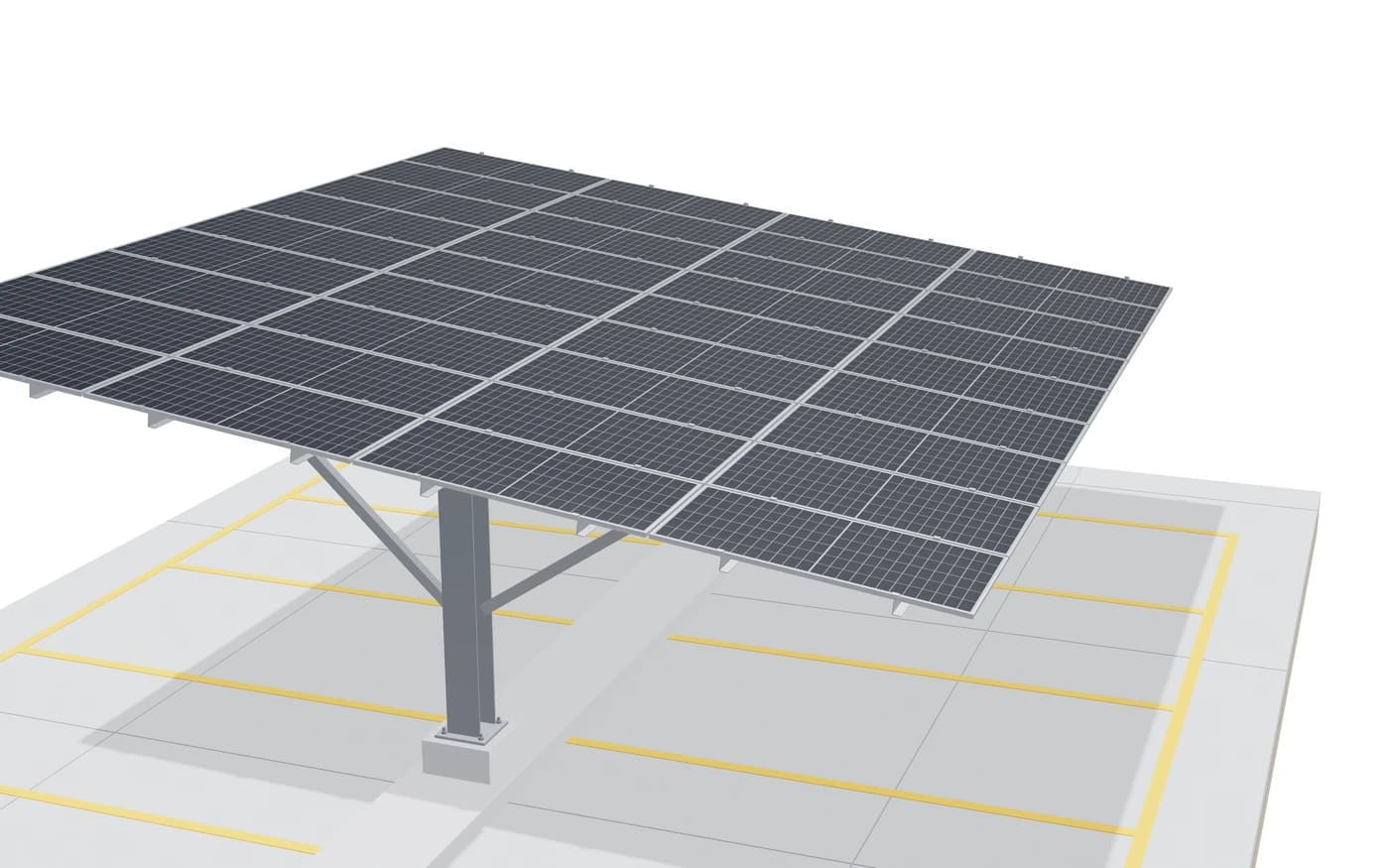
Solar carport
Open car park
Steel columns on concrete foundations carry the beams and purlins; the panels sit on top and form the carport roof, shading the cars below.
- Structure and foundations designed for the site’s wind load and soil conditions
- No building roof needed: for sites whose roofs are full, too weak or shaded
- Column positions and clearance follow the parking layout
Licences and certifications
For procurement teams: our licences and certificates, linked to their official sources where they are published online.




Warranty.
Manufacturer warranties on the equipment, a 1-year LEIN workmanship warranty, 10 years on the mounting structure, and free support with warranty claims.
Manufacturer warranties
Brands depend on availability, with brands from our Tier 1 list as the first choice; the exact brand, model and warranty terms are in your proposal.
| Equipment | Warranty |
|---|---|
| Solar panels | |
| Tier 1 n-type panels (e.g. JA Solar, Trina Solar) | Product warranty of at least 12 years and a 30-year performance warrantyOutput drops by at most 1% in the first year, then by 0.4% a year, so at least 87.4% remains in year 30. The terms for each model are in the comparison below. |
| Inverters | |
| Huawei SUN2000 for commercial and industrial systems | 5 years |
| Other components | |
| Huawei SmartLogger and Smart Power Meter | 2 years |
| Aluminium and stainless steel mounting structure | 10 yearsAgainst material defects. |
| Cables, distribution boards, protection devices and accessories | 1 yearAgainst material defects. |
LEIN workmanship warranty
1 year from handover
It covers the quality of our work, not materials:
- Mounting structure and panel installation
- DC and AC cabling
- Distribution panel assembly
- Watertightness of the roof penetrations we make
Terms
- Support with manufacturer claims is free. Costs the manufacturer does not cover (removal and reinstallation, transport and shipping of the unit, and import duties and taxes on the replacement unit) are paid by you, unless the damage comes from our installation within the workmanship warranty period.
- The workmanship warranty ends if the system is modified, moved or repaired without LEIN’s written approval.
- Not covered: natural disasters, direct lightning strikes and fire; PLN voltage surges, pests and negligent operation; the existing electrical installation, normal wear and discolouration; and building changes needed for the installation.
- Keep the system online, and tell us when you change your router or Wi-Fi. Monitoring, firmware updates and the manufacturers’ extended warranties depend on this connection.
- Damage that appears or grows because the system stayed offline for a long time without monitoring is not covered by the workmanship warranty, and the manufacturer may reject the claim.
- The manufacturers’ terms apply. The exact models and terms are in your proposal.
How manufacturer warranties compare
From each manufacturer’s own warranty documents and datasheets, checked between 30 October 2026 and 2 November 2026. What applies to your system is the warranty for the exact model and document version in your proposal.
Solar panels · Inverters · Monitoring, metering and backup components
Compare Manufacturer WarrantiesHide The Comparison
Solar panels
Product warranty
Covers defects in the panel itself: materials, workmanship and manufacturing. If a panel fails from a defect, the manufacturer repairs or replaces it, or refunds its remaining value.
Performance warranty
Guarantees a minimum power for every year of the warranty, measured under standard test conditions. If a panel falls below it, the manufacturer replaces it, adds panels to make up the difference, or refunds the shortfall.
| Brand and model | Product warranty | Performance warranty | Loss in year 1 | Annual loss after year 1 | Minimum at the end |
|---|---|---|---|---|---|
| JA Solar DeepBlue 4.0 Pro (JAM54D40) | 15 years | 30 years | 1% | 0.4% | 87.4% |
| Trina Solar Vertex S+ (TSM-NEG9R.28) | 15 years | 30 years | 1% | 0.4% | 87.4% |
| Jinko Solar Tiger Neo (JKM-N-54HL4R) | 15 years | 30 years | 1% | 0.4% | 87.4% |
| LONGi Hi-MO X10 (LR7-54HVH) | 15 years | 30 years | 1% | 0.35% | 88.85% |
Inverters
| Brand and models | Homes | Commercial & industrial | Warranty start and conditions | Extended warranty |
|---|---|---|---|---|
| Huawei SUN2000 | 10 years | 5 years | From installation and commissioning. |
|
| SMA Sunny Boy, Sunny Tripower | 5 years | 5 years | From commissioning when registered within 12 months. Units bought under SMA’s earlier terms are covered in Indonesia; version 88, for purchases from 20 May 2026, covers Asia-Pacific only in Australia and New Zealand. |
|
| Sungrow SH and SG series | 5 years | 5 years | Asia-Pacific terms: from installation for units bought through Sungrow’s authorised distributors, at most 6 years after production. |
|
| Solis S5 and S6 series | 5 years | 5 years | For units made from 1 July 2025: from the sale date for individual buyers, otherwise from commissioning or 6 months after leaving the factory, whichever is earlier. |
|
| Deye SUN-SG hybrid, SUN-G | 5 years | 5 years | From the installation date. |
|
| GoodWe ET, EH, ES, DNS, XS, SDT, SMT, HT | 5 years | 5 years | From installation, or 6 months after production, whichever is earlier. |
|
Most paid extensions must be bought early, often within the first year after purchase or installation. We can arrange one with your order; its term and cost are in your proposal.
Monitoring, metering and backup components
| Brand | Component | Warranty |
|---|---|---|
| Huawei | Optimisers for commercial and industrial systems | 5 years |
| Huawei | Smart Dongle, SmartLogger, smart meter and Smart Power Sensor | 2 years |
| GoodWe | Smart meters, Wi-Fi, LAN and 4G modules, EzLogger, SEC | 2 years |
| Solis | External meters, data logging sticks, export power managers | 2 years |
| SMA | Energy Meter, Sunny Home Manager, Data Manager M | 2 yearsUnder SMA’s earlier terms; version 88, for purchases from 20 May 2026, does not cover Indonesia. |
| Sungrow | Smart meter and WiNet-S dongle | 2 yearsAsia-Pacific terms, at most 3 years after production. |
Sources
- JA Solar Module Limited Warranty, Version A/14 (June 2026) (opens another website)
- Trina Solar Global Limited Warranty PS-M-0135-G-EN Rev. AC (June 2026) (opens another website)
- Jinko Solar Limited Warranty REV.EN20250919, monofacial modules (September 2025) (opens another website)
- LONGi Hi-MO X10 Explorer LR7-54HVH datasheet and launch announcement (October 2024) (opens another website)
- Huawei Smart PV Warranty Policy (Non-European) V1.2 (2026) (opens another website)
- SMA Limited Factory Warranty COM-RES-GB-en-82 (January 2025) (opens another website)
- SMA Limited Factory Warranty COM-RES-GB-en-88 (May 2026) (opens another website)
- Sungrow Manufacturer Warranty, Asia Pacific except China (Sungrow Service APAC) (opens another website)
- Solis Warranty Solis-20250701-GL, for products made from July 2025 (solisinverters.com) (opens another website)
- Solis Limited Warranty Solis-20240305-GL (March 2024) (opens another website)
- Deye Inverter Warranty Terms and Conditions, Version 1.7 (2023) (opens another website)
- GoodWe Limited Warranty for Inverter System, Global, Rev 5.3 (September 2026) (opens another website)
- SMA Warranty cover home: free 5-year extension and extended warranties (sma.de) (opens another website)
- Solis Service: extending the warranty with the SolisCloud app (March 2025) (opens another website)
Monitoring and maintenance.
After handover, you see how the system performs, and we keep it performing.
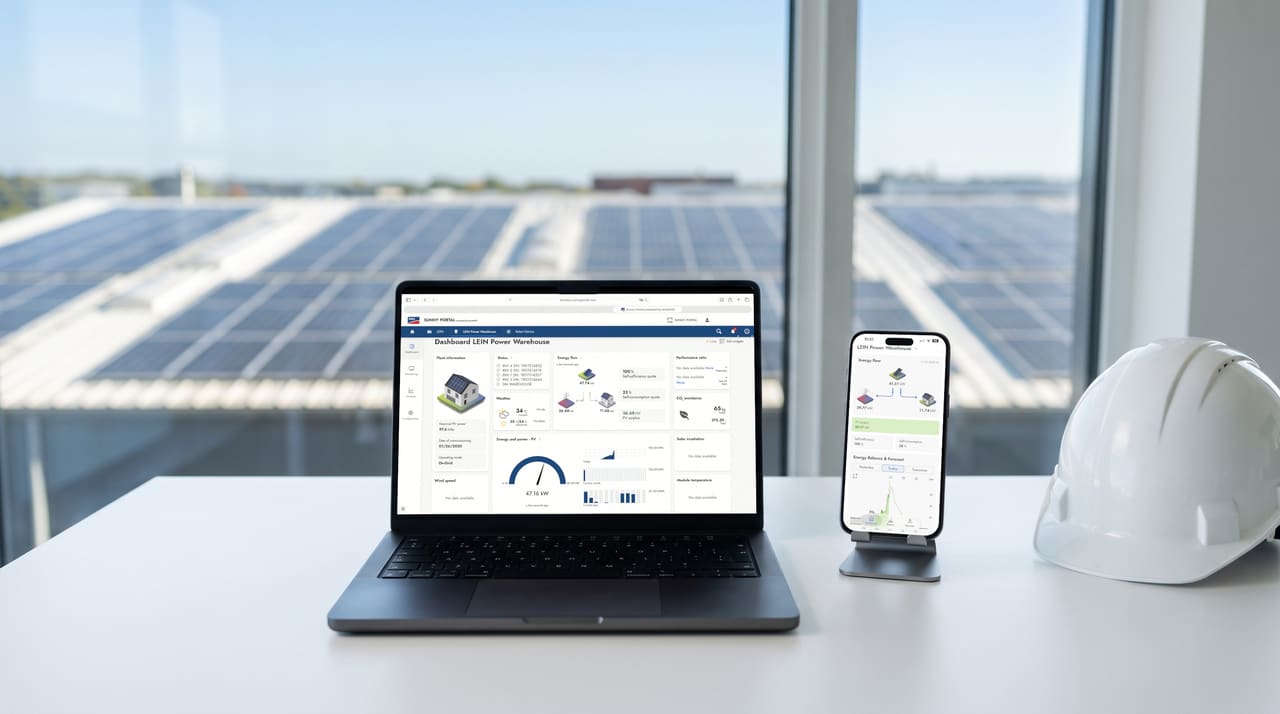
Monitoring in your company’s name
Systems are registered in your name on the manufacturer’s monitoring app, with LEIN as the installer, so the data and the warranty stay in your name. You can see data for each inverter, as well as production reports.
Preventive maintenance
Scheduled visits with panel cleaning, visual and electrical checks and inverter maintenance, and a report after each visit.
Corrective maintenance
We monitor at string level in the manufacturer’s monitoring app and respond within 24 hours on working days: fault finding and repair, with warranty claims handled with the manufacturers.
Book a one-off visit or an annual maintenance package; performance guarantees can be arranged in an O&M contract. The price depends on the size of your system.
Our commercial & industrial projects.
Browse the rooftop solar systems LEIN Power has designed and built for commercial buildings and industry. Projects built for solar developers are listed by developer and the end customer’s sector.
Commercial 17 featured projects
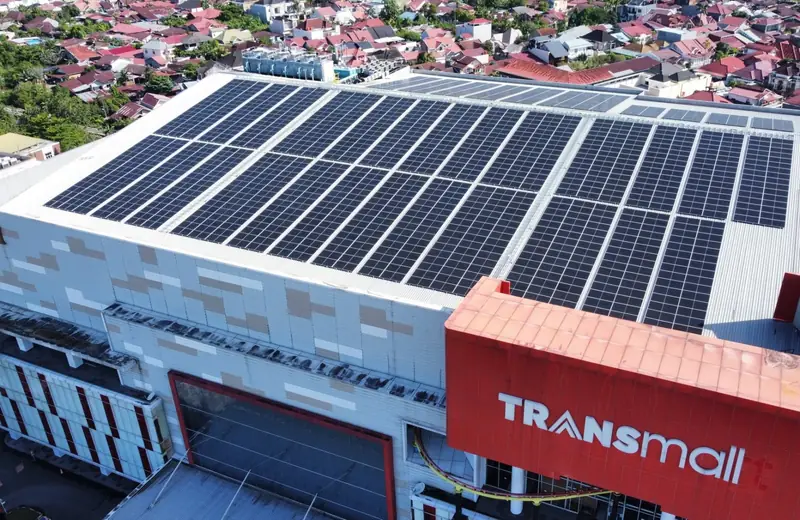
Xurya · Retail & shopping centres · West Sumatra753.9 kWp 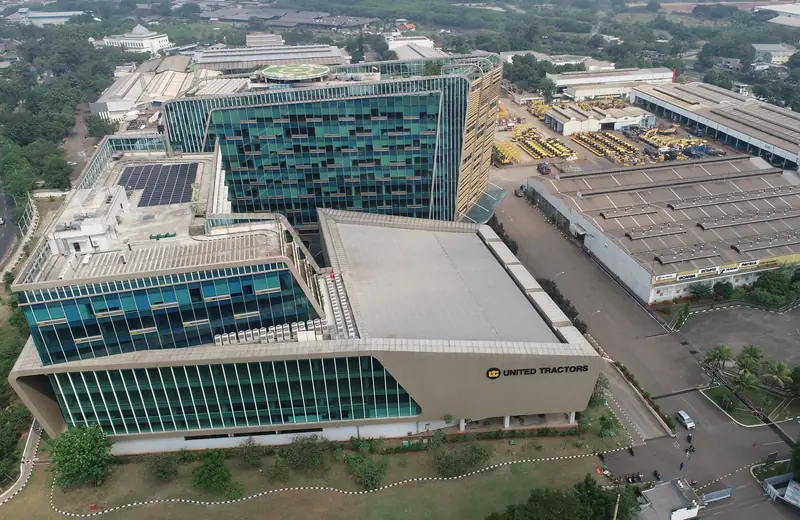
United Tractors Head Office · Cakung · Jakarta50.8 kWp 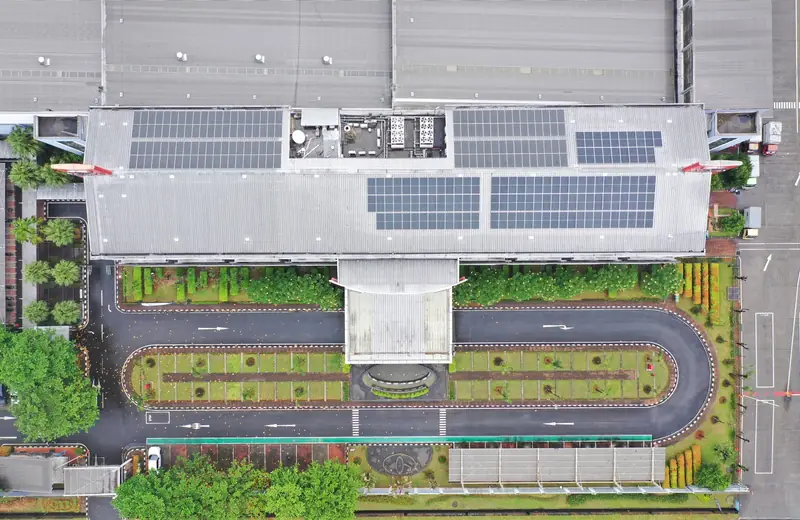
Toyota Astra Motor SPLD · Cibitung · Bekasi61.56 kWp 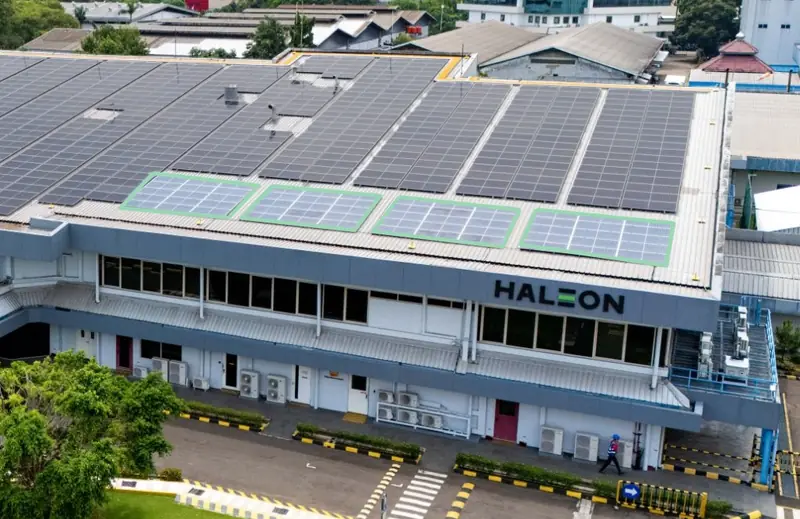
GSK | Haleon · Jakarta22.5 kWpMint outline: LEIN’s four arrays (2019). The other panels on this roof are by other installers. 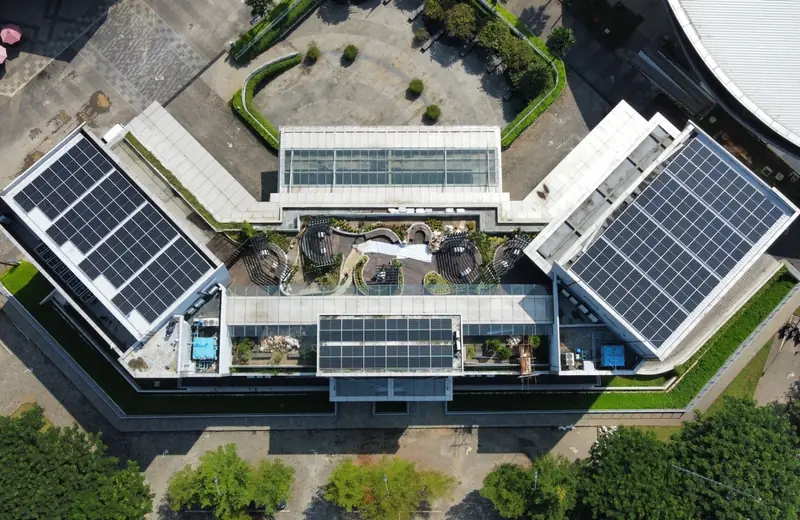
Astra Biz Center · BSD · South Tangerang32.4 kWp 
Prasetiya Mulya · BSD · South Tangerang49.5 kWp 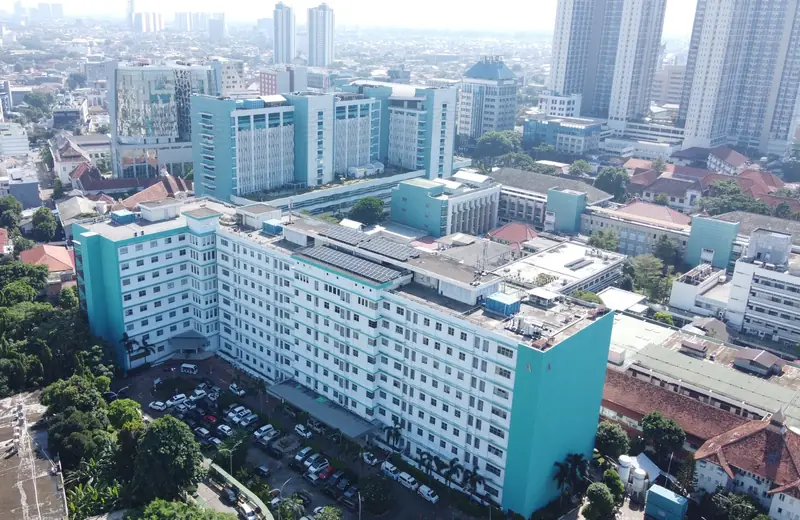
RSCM Building A · Jakarta49.5 kWp 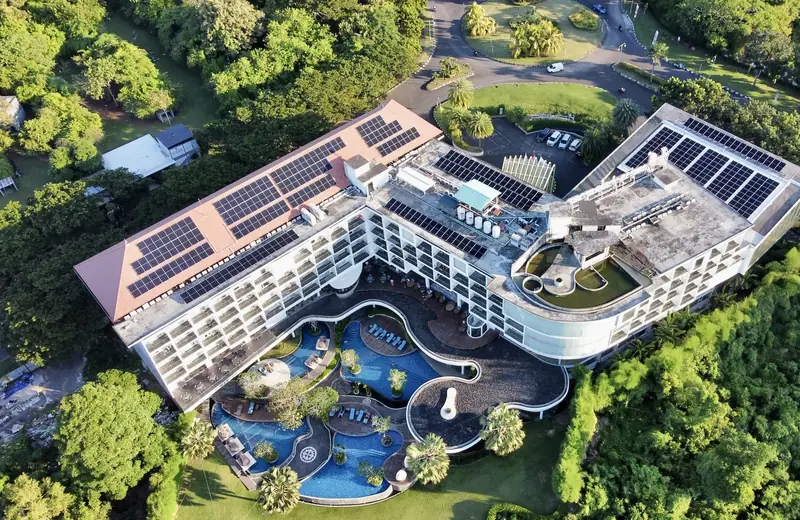
Xurya · Hospitality & leisure · Bali177.48 kWp 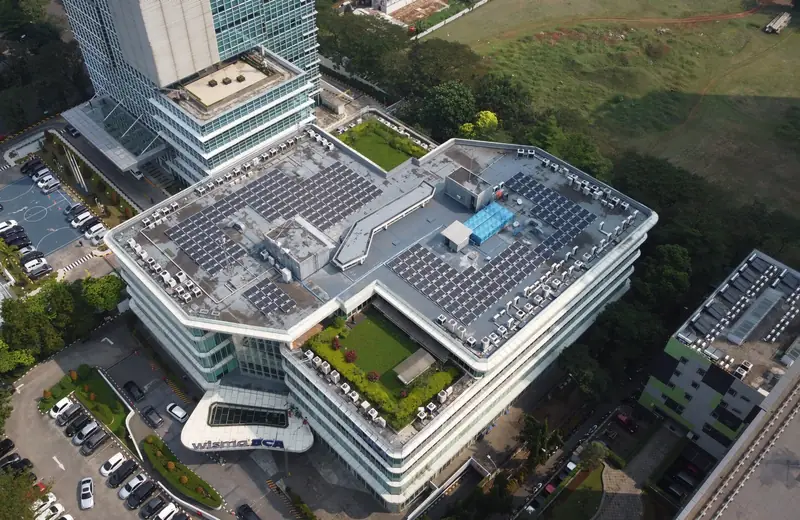
Wisma BCA · BSD · South Tangerang98.94 kWp 
Xurya · Hospitality & leisure · Jakarta15.4 kWp 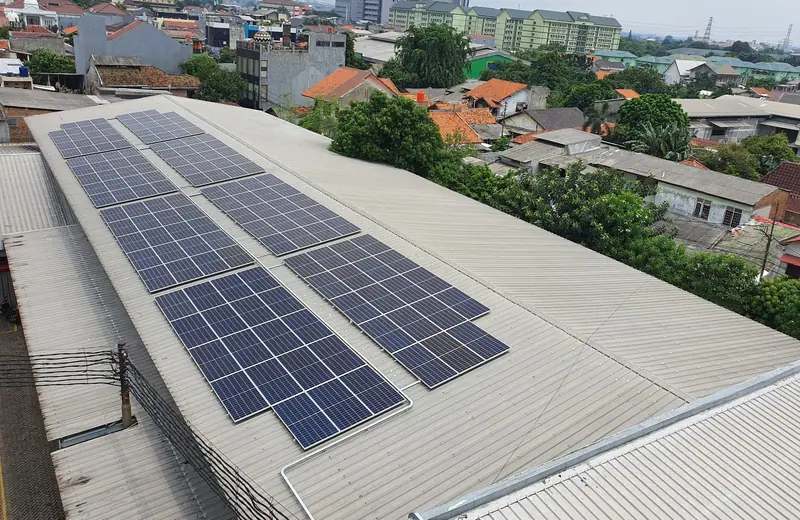
Astra Motor HSO Dewi Sartika · Jakarta62.4 kWp 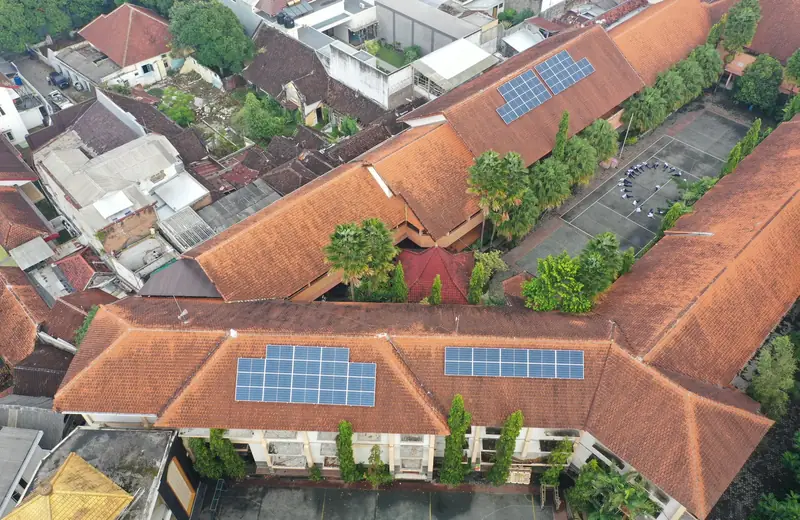
SMPN 3 · Malang19.6 kWp 
PAMA 2 Head Office · Jakarta130.2 kWp 
Pertamina Apartment RU IV · Cilacap189 kWp 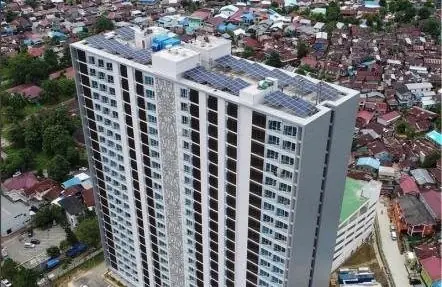
Pertamina Apartment RU V · Balikpapan94.5 kWp 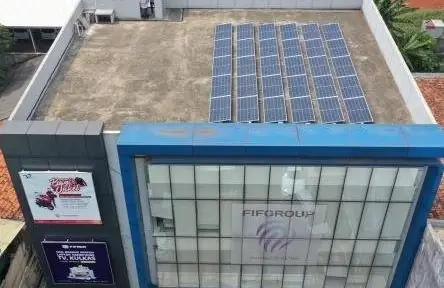
FIF Astra · Pamulang · South Tangerang10.5 kWp 
GS Battery · Karawang50.2 kWp
Industrial 17 featured projects
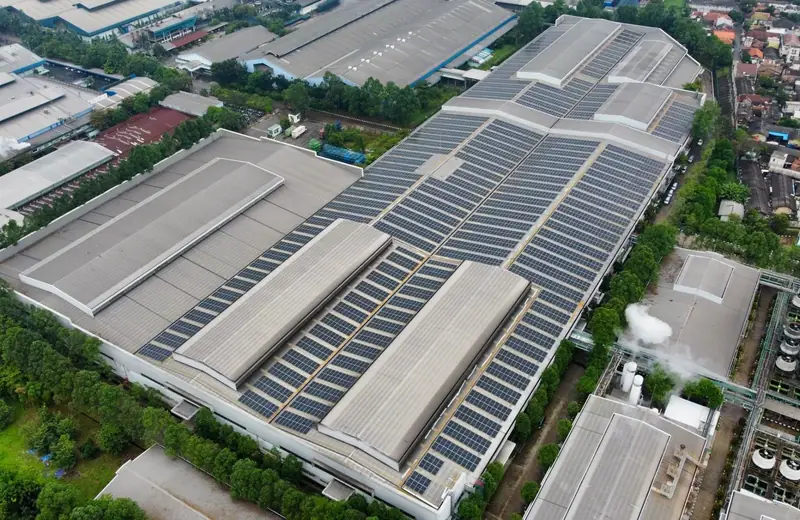
Xurya · Tyres & rubber · Banten2,747.80 kWp 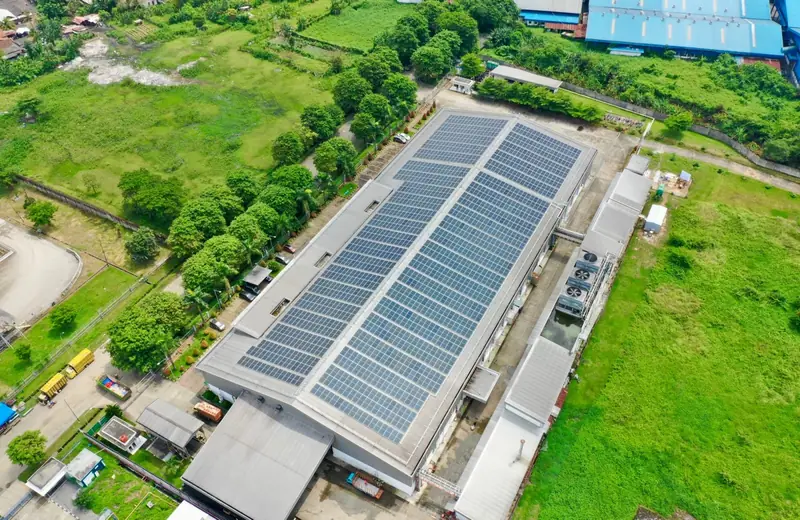
Greenroof · Agribusiness & animal feed · Banten899.84 kWp 
Greenroof · Plastics & packaging · Central Java1,821.48 kWp 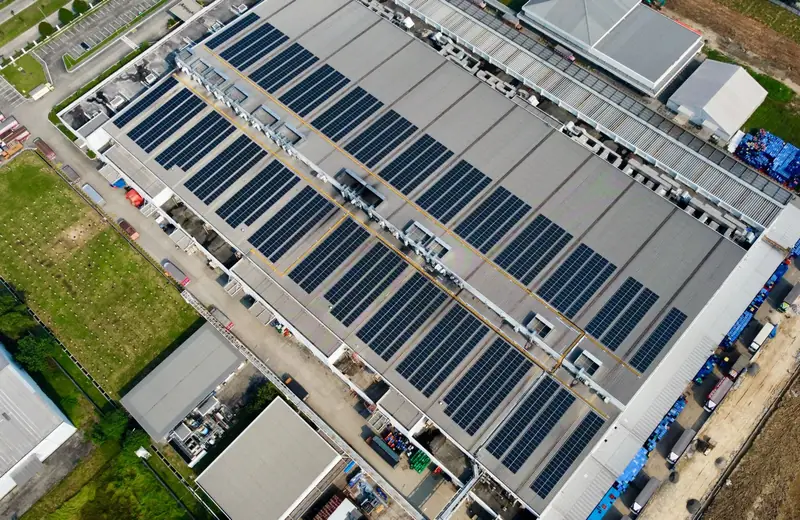
SUN Energy · Automotive & components · Banten1,350.80 kWp 
Xurya · Logistics & warehousing · West Java751.84 kWp 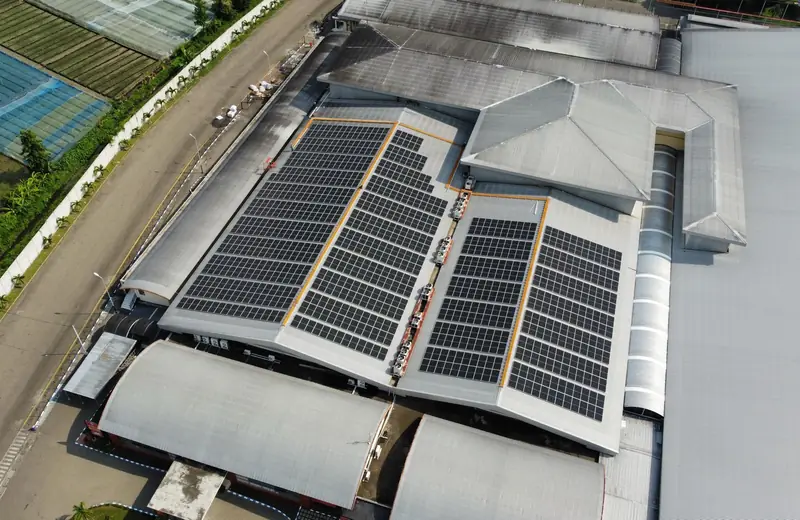
Suryanesia · Food & beverages · East Java503.13 kWp 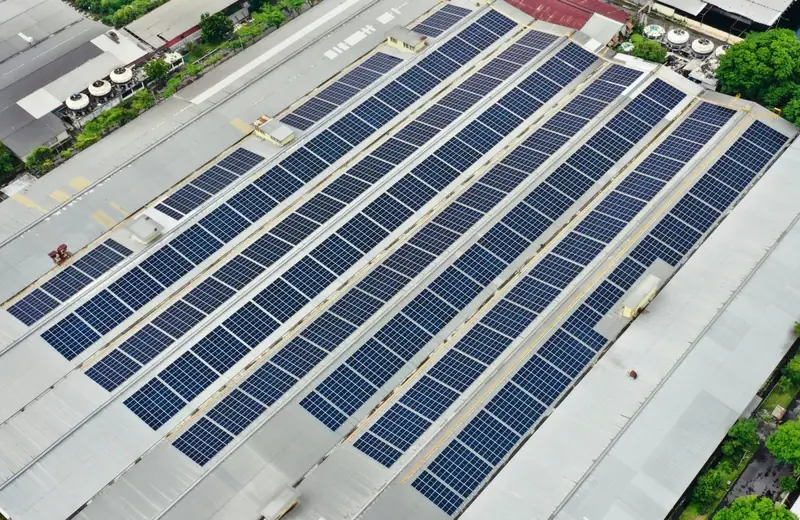
Xurya · Textiles & garments · Central Java2,717.88 kWp 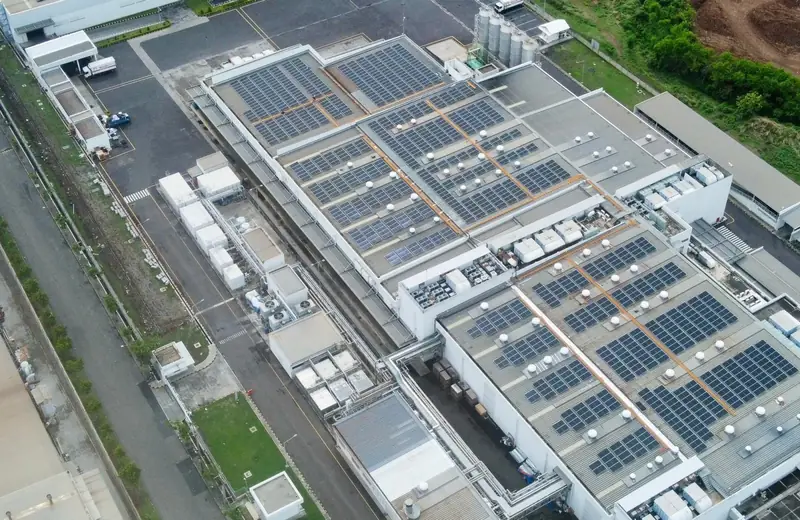
Xurya · Food & beverages · West Java308 kWp 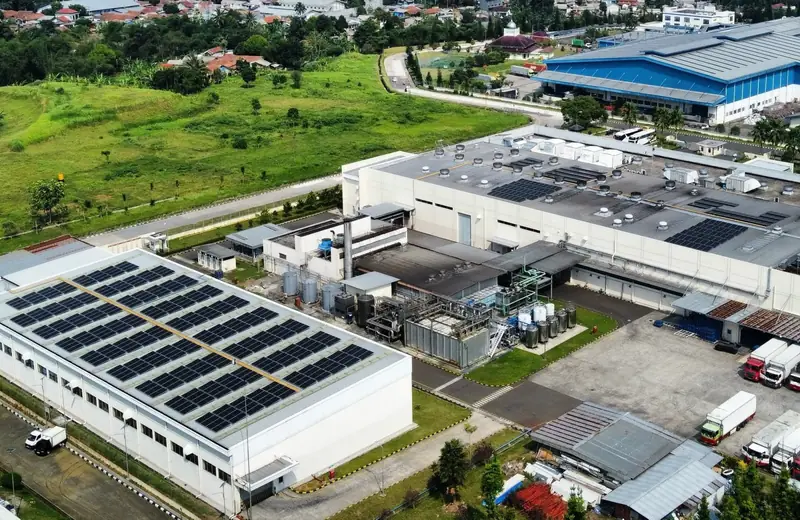
Xurya · Food & beverages · East Java783.20 kWp 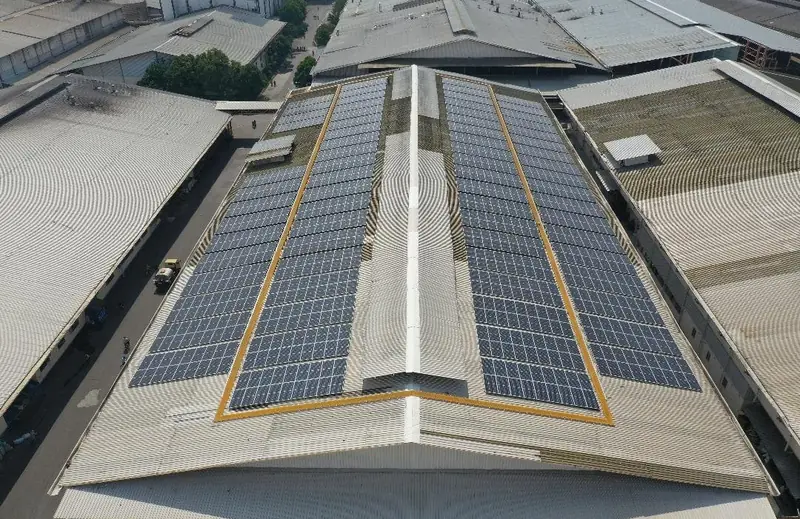
Xurya · Textiles & garments · West Java583.2 kWp 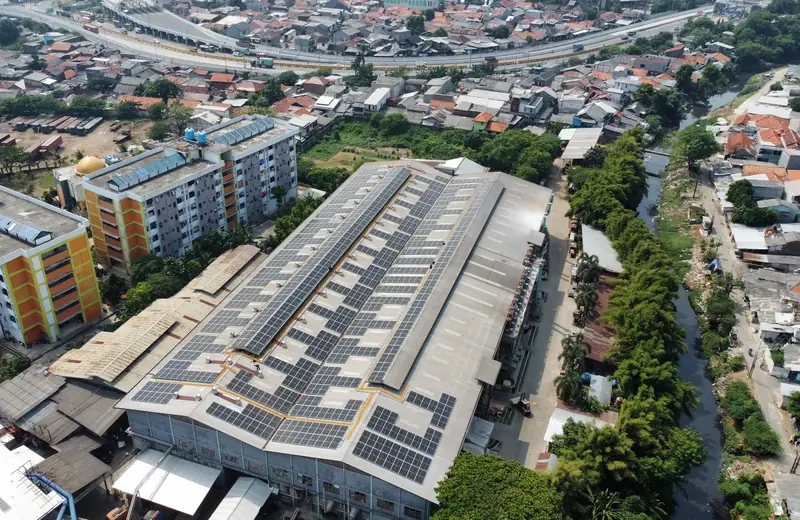
Suryanesia · Furniture & processed wood · Jakarta431.46 kWp 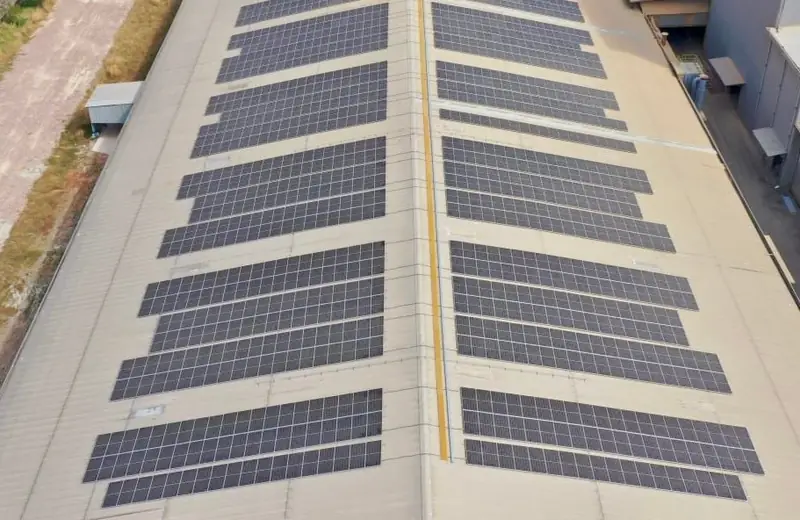
Xurya · Ceramics & building materials · East Java1,881 kWp 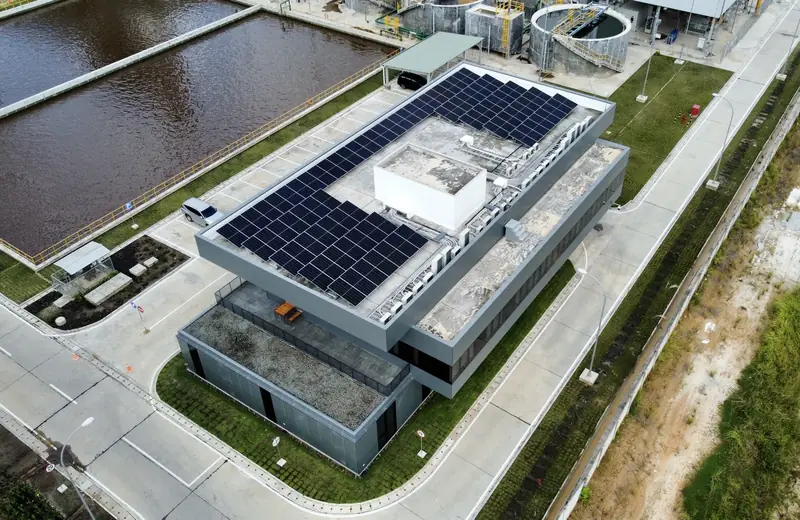
Medco Ratch Power Riau · Pelalawan47.52 kWp 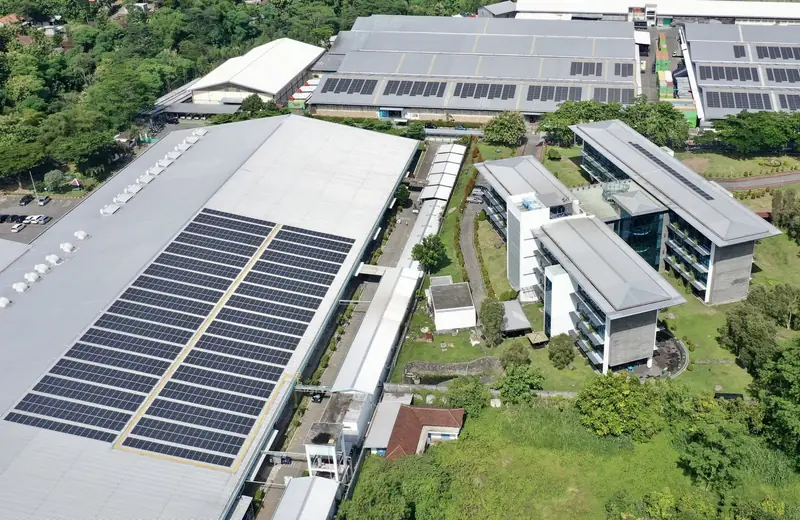
Xurya · Textiles & garments · Central Java1,727.5 kWp 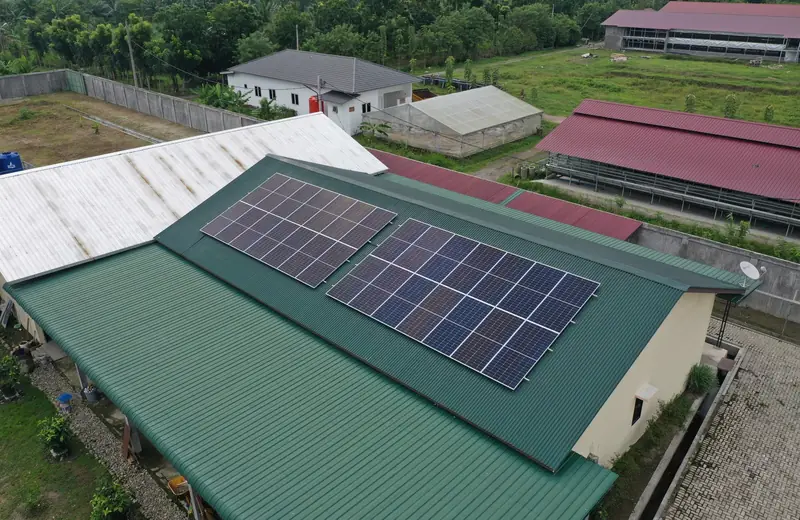
Poultry Farm · Deli Serdang15 kWp 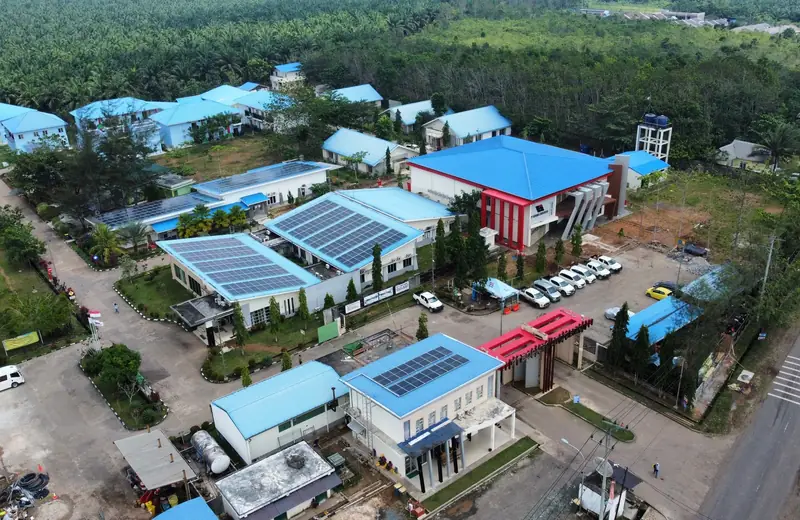
BIB Angsana Phases I and II · Tanah Bumbu164.22 kWp 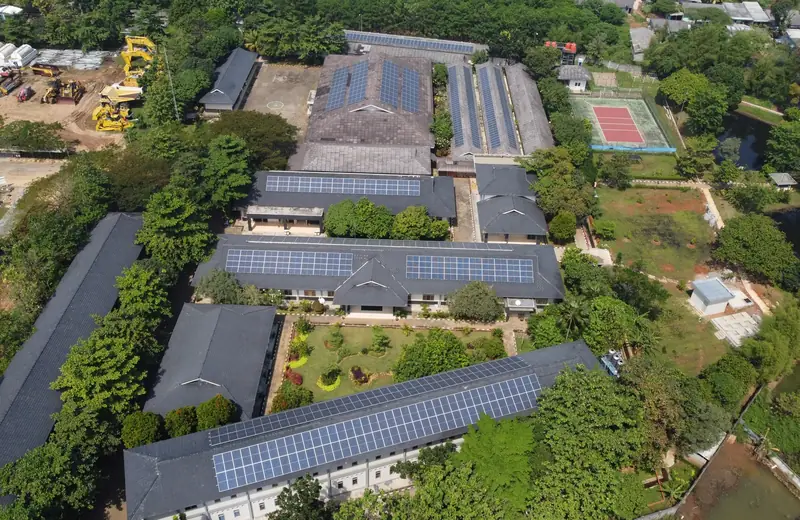
PAMA · Cileungsi · Bogor400 kWp
Trusted by leading companies

















Questions businesses ask.
Can we sell excess power to PLN?
No. Since Minister of Energy and Mineral Resources Regulation No. 2 of 2024, power exported to PLN no longer reduces the bill. That is why we size the system to your daytime load and set the inverters to zero export.
Is there an option with no upfront investment?
Yes. Besides buying the system, your company can go solar with no upfront investment through a lease or a power purchase agreement (PPA) with a solar developer. We build rooftop systems for solar developers and can introduce you. The contract term and the price of the power then follow the developer’s offer.
What happens on holidays or during a PLN outage?
On holidays, the inverters limit output to what the building uses and keep a small draw from PLN as a safety margin. During an outage, an interlock contactor disconnects the inverters so solar power cannot flow back into the genset, and the building’s diesel genset, if it has one, takes over the load. The solar power system reconnects once PLN is back.
Will installation disrupt production?
Most of the work happens on the roof while the building runs as usual. Connecting to the building’s main distribution board follows your schedule and takes about 1 day.
Is our roof strong enough?
We look at the roof type, its condition and the structure during the site visit, and design the mounting for it. If the roof needs attention first, we discuss it with you before the contract.
How long does a project take?
Typically about 20 weeks from contract to testing and commissioning. Procurement depends on material availability and customs clearance, and installation on the weather. PLN approval follows the rooftop solar quota for your area and PLN’s application periods, so it can take longer when the quota is full.
Which permits are needed?
The system needs PLN approval and an operating certificate (SLO). We prepare the technical documents and support you through both until the system is officially running. LEIN holds an IUJPTL business licence and an SBUJPTL certificate from the Ministry of Energy and Mineral Resources.
Is the survey free?
The online survey is free: we model your roof with simulation software. We then arrange a site visit with you. A full engineering site survey, with a written report, PQA load measurement and studies, is a separate paid service.
What warranty do we get?
Manufacturer warranties on the equipment, a 1-year LEIN workmanship warranty, 10 years on the mounting structure, and free support with warranty claims. The exact models and terms are in your proposal.
Who owns the monitoring data?
You do. Systems are registered in your name on the manufacturer’s monitoring app, with LEIN as the installer, so the data and the warranty stay in your name.
See what your roof can do.
Tell us about your building, and we will send a first design and savings estimate. The online survey is free: we model your roof with simulation software. We then arrange a site visit with you.
Get A Quote (opens another website)What to prepare
- PLN bills for the last 12 months
- Connected capacity (kVA)
- Roof photos or a roof plan
- Operating hours and holidays