

Your home, powered by sunshine.
We design and install rooftop solar sized to how your family uses power, with a battery when you want the lights on through a blackout.
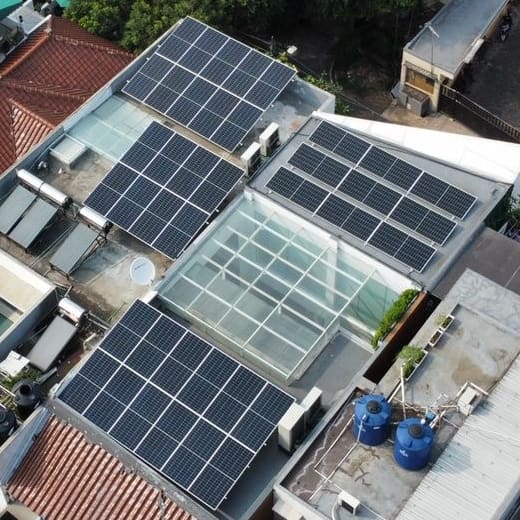
LEIN project Badung · Bali · 5.45 kWp
Which system fits your home?
Three ways to put the sun to work. Pick a system and a time of day to see how power flows through the home.
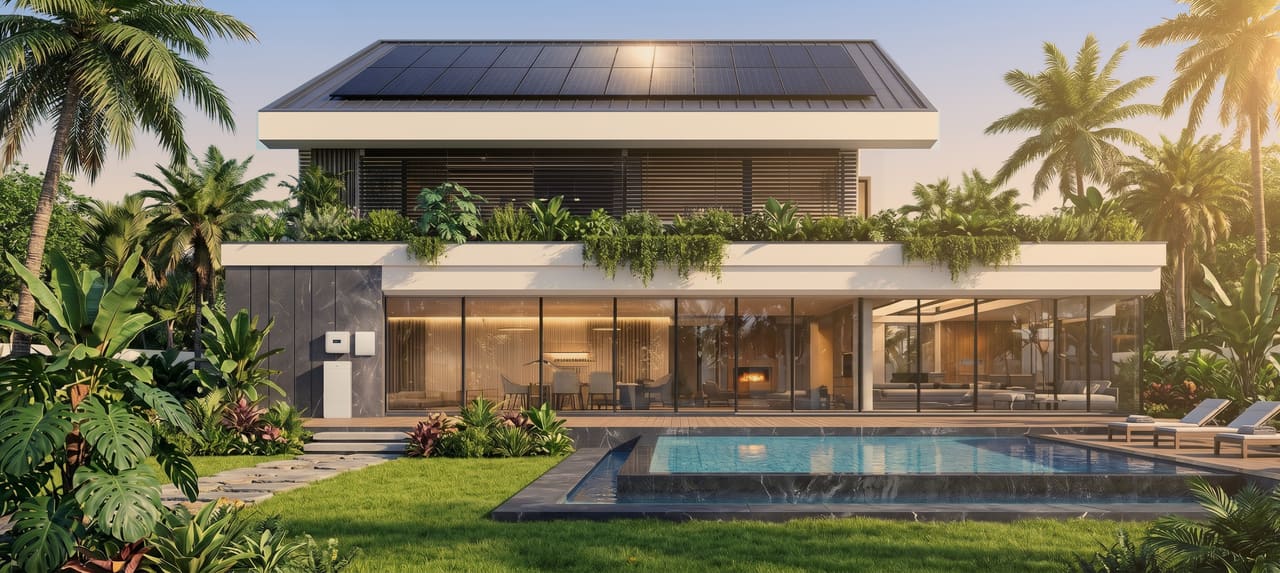
kW figures are rounded from 1 day of data from a LEIN hybrid home system (7.74 kWp, 15 kWh battery); on-grid uses the same data without the battery. Cloudy, Rainy and Blackout are simulated. Off-grid is a simulation with the same home and panels, no PLN, a battery for about 2 days of use, and a diesel genset as backup. Image: illustration, not a LEIN project.
Hybrid System
Solar with a battery. The midday surplus is stored for the night, and the backup circuit stays on in a blackout. What we recommend for most homes.
On-Grid System
Solar without a battery, for homes that use most of their power in the daytime and do not need backup. It shuts down during a blackout.
Off-Grid System
For homes without a PLN connection, or homes that want to be independent of PLN, we design systems with panels and a battery sized for daily use, plus a diesel genset for long overcast spells.
See how many panels fit on your roof and what they save.
Calculate Your SavingsWhy go solar at home?
Lower bills by day, the lights on in a blackout, and a smaller footprint.
How you save under the 2024 regulation.
Since Minister of Energy and Mineral Resources Regulation No. 2 of 2024, power exported to PLN no longer reduces the bill. That is why we size every home system to what your home uses, not to the size of your roof.
By day
The panels supply the home first. Every kilowatt-hour they cover is one you do not buy from PLN.
Midday surplus
With a hybrid system, the surplus charges the battery instead of flowing to PLN. An on-grid inverter is set to zero export and holds it back.
At night
With our standard settings, the battery stays full until midnight in case of a blackout, then covers most of the home’s use from 00:00 to 06:00 down to a 20% reserve.
Blackouts, handled.
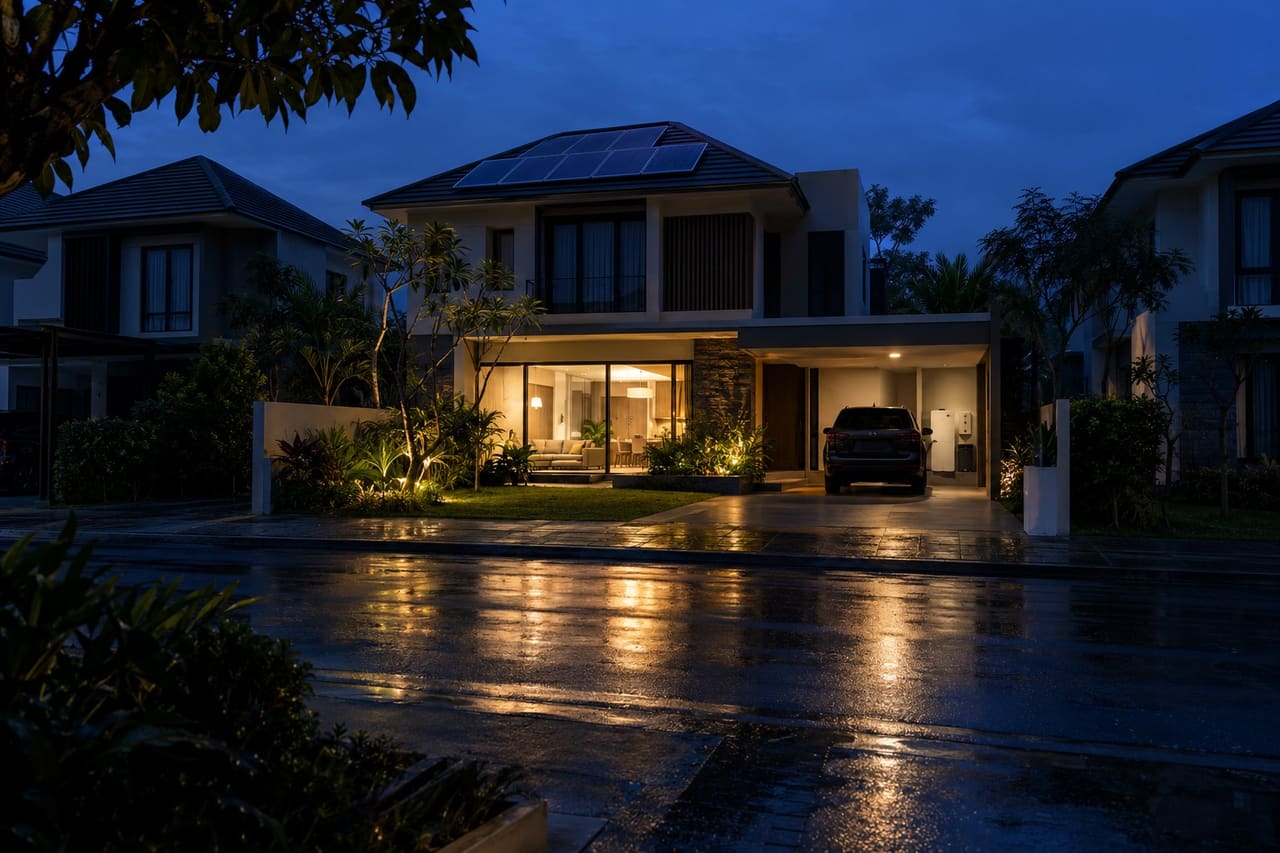
A hybrid system adds a battery and, depending on the inverter, a backup box. When PLN goes down, the system switches the backup circuit over to the battery automatically, and the panels keep recharging it during the day.
What stays on is your choice
Most families keep
- Lights
- Fridge
- Wi-Fi
- TV
- Fans
Some also add
- AC ½ PK
- Water pump
The calculator sizes the battery and inverter for the appliances shown here, or for your own list if you enter one, and shows how long they run and your maximum backup power. That limit is set by the inverter and the battery’s power modules, not by the panels.
Without a battery, an on-grid system shuts down during a blackout to keep PLN repair crews safe.
Size Your BatteryAdd a battery to the system you have
Your on-grid system shuts down when PLN goes down, and if it was approved under the 2024 regulation, its midday surplus no longer lowers your bill. A battery added to it stores that surplus for the night and, with a backup box, keeps the backup circuit on in a blackout.
Ask About Adding A Battery (opens another website)- We check what you have
The inverter and its settings, the panel strings, the distribution board, your PLN connection and approval, and a dry, shaded spot for the battery.
- Your inverter stays
In most cases the battery is added by AC coupling, with its own inverter next to the one you have. If your inverter is due for replacement, a hybrid inverter can take its place.
- Sized to what you need
The battery is sized to the devices you want on the backup circuit and the hours you need them, with the same model as our calculator.
We have done it before
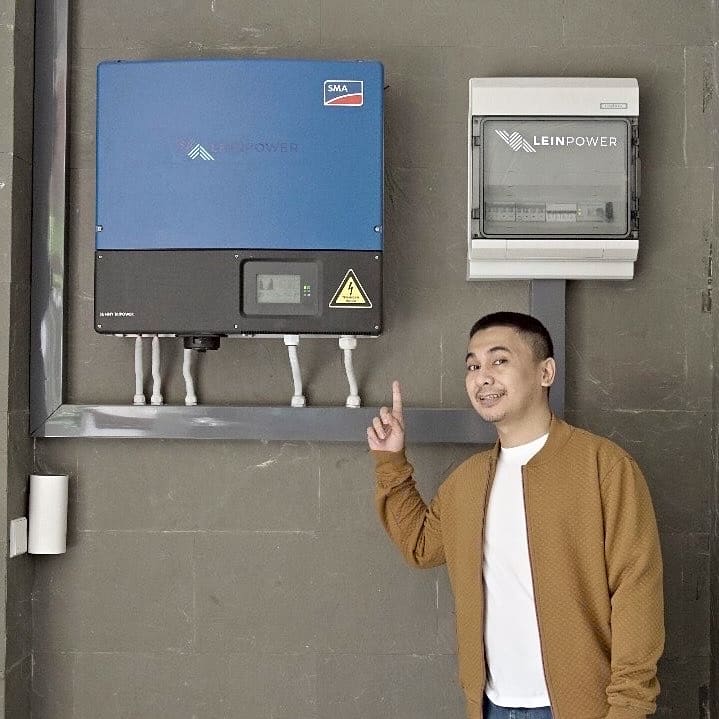
- Residence, Serenia Hills. A 5.6 kWp on-grid system with an SMA inverter, installed in 2020. We later added a 15 kWh battery by AC coupling, keeping the SMA inverter.
- Residence, East Jakarta. A 4.86 kWp on-grid system with an SMA inverter, installed in 2021. We later added a 10 kWh Deye battery by AC coupling, keeping the SMA inverter.
- Poultry Farm, Deli Serdang, North Sumatra. A 15 kWp on-grid system with an SMA inverter, installed in 2021. We added a 25 kWh battery by AC coupling the following year, keeping the SMA inverter.
Was your system approved before the 2024 regulation? Its export-import scheme stays valid for 10 years from PLN’s approval, but a change in capacity moves the system to the new rules (Article 47 of the regulation). Before any work, we check with you, and with PLN where needed, how adding a battery affects your approval.
5 easy steps to enjoy solar.
What you receive at each step, from the first survey to a system running in your name.

Site survey
A free online survey with simulation software, then a site visit arranged with you to check the roof and distribution board.

Design engineering
A design with the panel layout and a production estimate, then a proposal with the equipment list and the price.

Procurement
Panels, inverter and battery from authorised distributors, with the manufacturers’ warranties.

Installation
Installation and testing supervised by our engineering team, with the documents for PLN approval and the operating certificate (SLO).
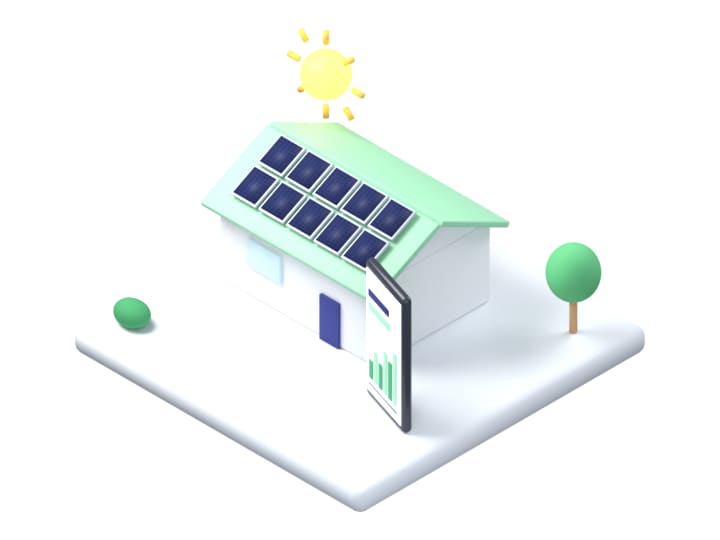
Monitoring
A system registered in your name on the monitoring app, with our support for maintenance and warranty claims.
Built for your roof.
Every roof type has its own mounting method, the same one we specify in our proposals: either the roof is not drilled at all, or every fixing point is sealed.
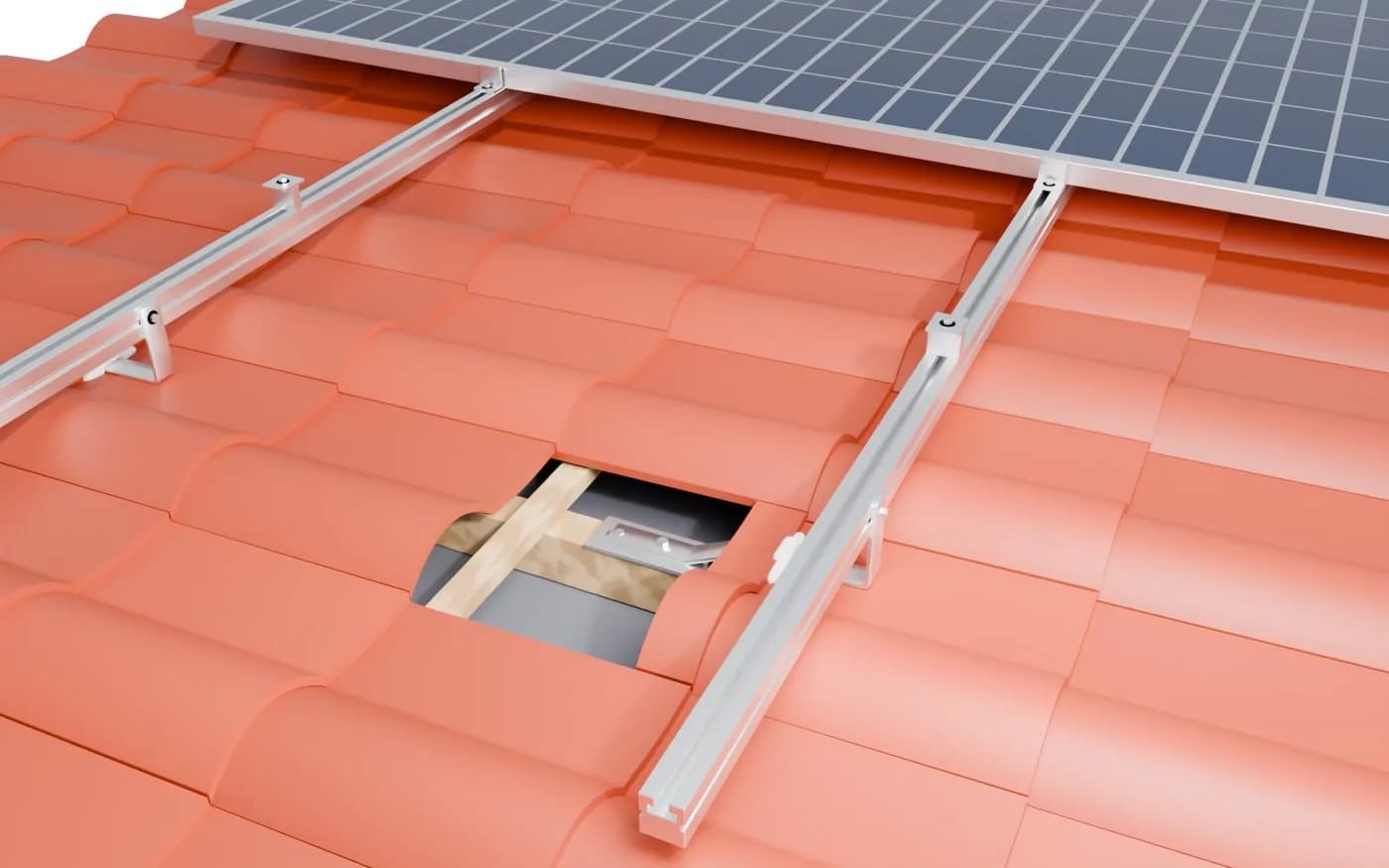
Tile roof hook
Clay / concrete tiles
Aluminium hooks are screwed to the rafters or trusses (timber or light steel) — never to the battens — with stainless-steel screws and bolts; tiles are refitted over the hooks and the rail is bolted to the side of each hook’s upright.
- No holes in the tiles: water keeps running over the tiles
- Silicone sealant at every point where a hook comes out over the tiles
- Tiles cracked during the works are replaced by LEIN
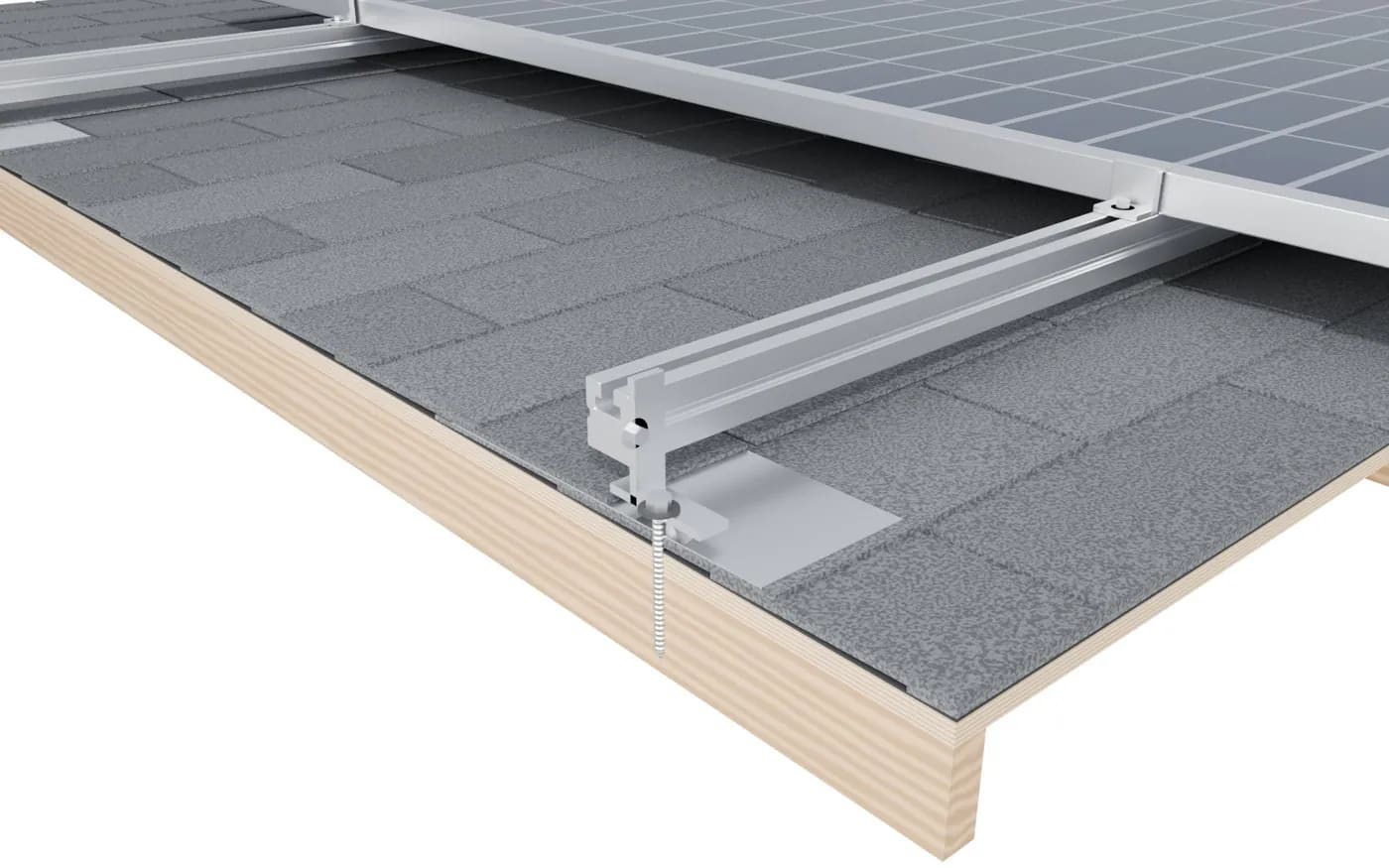
PV mount flash
Asphalt shingle
Standoffs are lag-screwed to the roof structure with a flashing plate tucked under the upper roof layer as a second watertight layer.
- Flashing sheds water above the fastener — two layers of protection
- Structural screws into the roof frame, not the covering
- Anodised aluminium rails on the standoffs
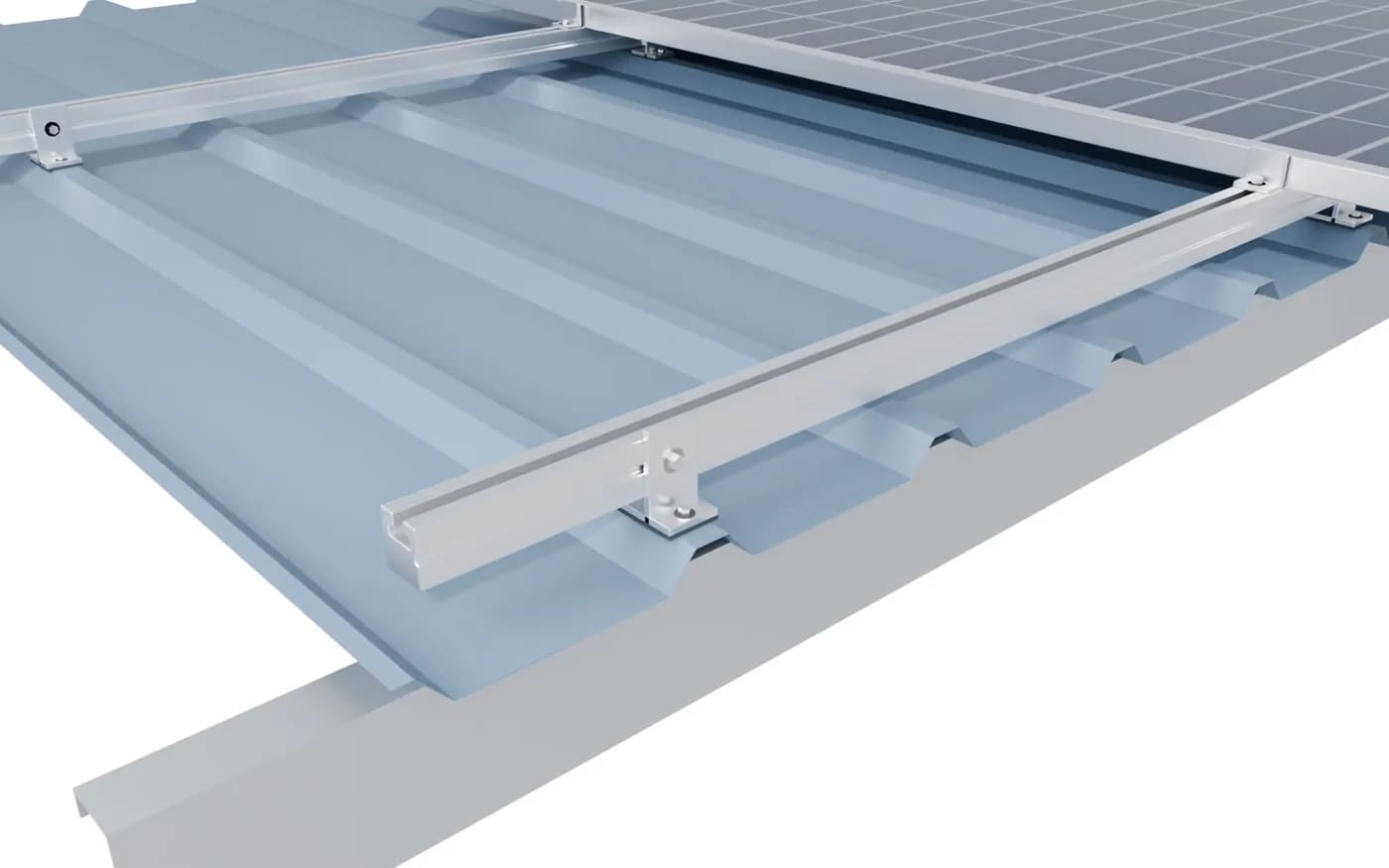
L-feet
Metal deck (spandek) / uPVC sheet
Aluminium L-feet sit on the rib crests, each fixed to the purlin with one self-drilling screw + EPDM washer; rails sit on the L-feet.
- One screw per L-foot on the rib crest, with EPDM washer + sealant at every point
- L-feet spacing per wind-load and purlin-span calculation
- Anodised aluminium rails, stainless-steel fasteners
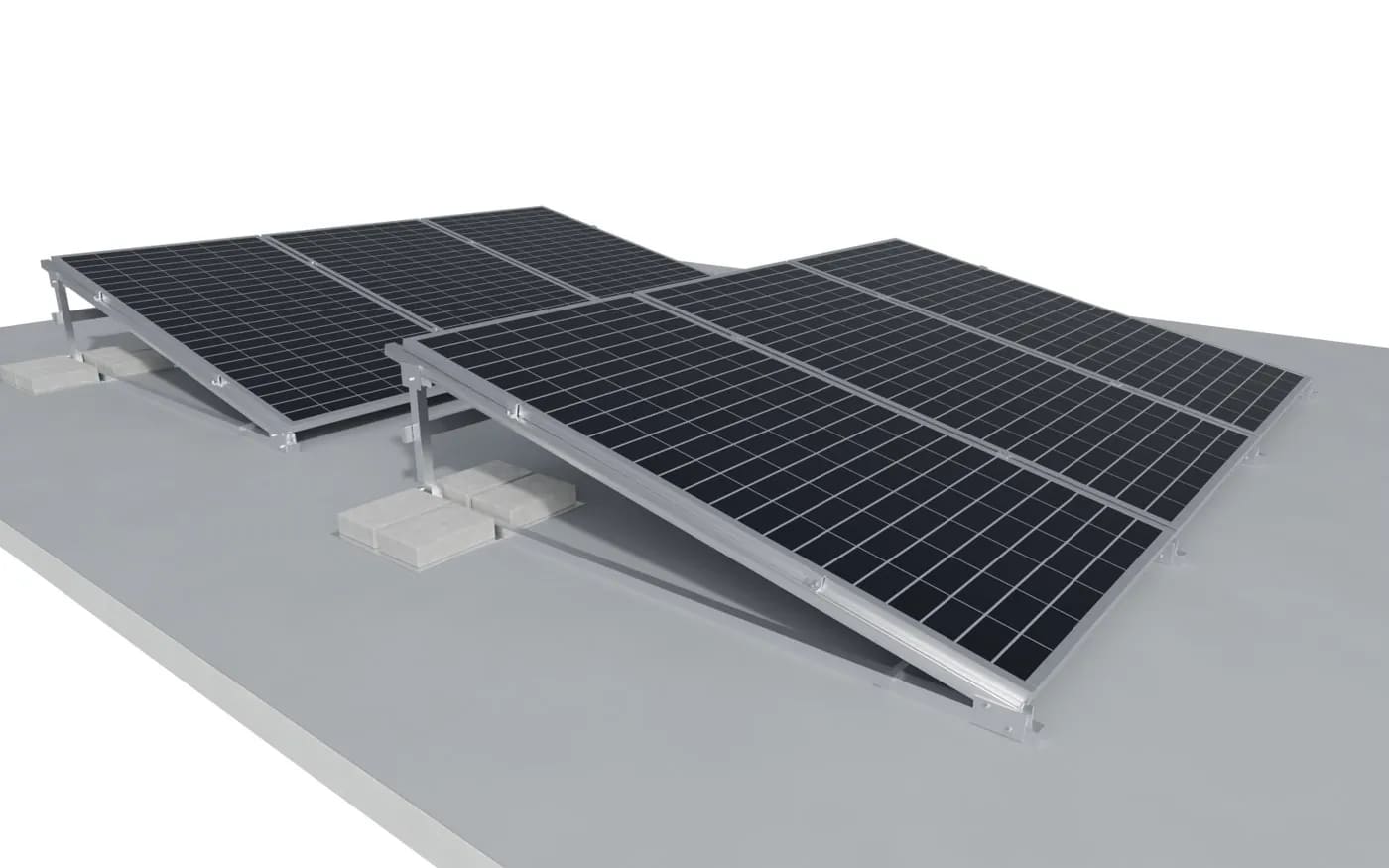
Ballast (concrete blocks)
Concrete flat roof
A triangular 10–15° aluminium frame rests on the deck and is held down by concrete ballast blocks on both sides of the base rail — the deck is not drilled.
- Ballast weight calculated against site wind load and deck load capacity
- Blocks sit on aluminium trays fixed to the frame, on both sides of the base rail
- Maintenance walkways between module rows
Panels, inverters and batteries we use
Our first choice is products from Tier 1 manufacturers, supplied through the manufacturers’ official representatives and authorised distributors with the manufacturers’ warranties.
Solar modules
- Tier 1¹² (BloombergNEF and S&P Global)

- Tier 1¹² (BloombergNEF and S&P Global)

- Tier 1¹² (BloombergNEF and S&P Global)

- Tier 1¹² (BloombergNEF and S&P Global)

Inverters & batteries
- Tier 1¹² (BloombergNEF and S&P Global)
 inverter · battery
- Tier 1¹² (BloombergNEF and S&P Global)
 inverter · battery
- Tier 1² (S&P Global)
 inverter · battery
- Tier 1² (S&P Global)
 inverter
- Tier 1² (S&P Global)
 inverter
- Tier 1² (S&P Global)
 inverter
Tier 1 — ¹ listed in the BloombergNEF Tier 1 List (PV modules, Q3 2026 edition; energy storage, Q2 2026 edition) · ² listed in S&P Global Tier 1 Cleantech Companies (2026). Tier 1 status reflects market acceptance and bankability, not a quality guarantee; it is reviewed with every new list release, and every product still passes LEIN’s technical qualification.
Warranty.
Manufacturer warranties on the equipment, a 1-year LEIN workmanship warranty, 10 years on the mounting structure, and free support with warranty claims.
Manufacturer warranties
Brands depend on availability, with brands from our Tier 1 list as the first choice; the exact brand, model and warranty terms are in your proposal.
| Equipment | Warranty |
|---|---|
| Solar panels | |
| Tier 1 n-type panels (e.g. JA Solar, Trina Solar) | Product warranty of at least 12 years and a 30-year performance warrantyOutput drops by at most 1% in the first year, then by 0.4% a year, so at least 87.4% remains in year 30. The terms for each model are in the comparison below. |
| Inverters | |
| Huawei SUN2000 for homes | 10 yearsRegistered in FusionSolar. |
| Deye hybrid | 5 years from the installation date |
| Batteries | |
| Huawei LUNA2000 | 5 years or 13.17 MWh per 5 kWh module, whichever comes first, at 60% remaining capacityYears 6 to 10 are an extended warranty that applies while the system stays registered and online in FusionSolar. A system offline for more than 6 months loses it. |
| Deye LiFePO4 | 10 years or the model’s energy limit, whichever comes first, at 70% remaining capacityUnder the Deye Warranty Letter: SE-G5.1 Pro-B (5.12 kWh) 16 MWh, SE-F16 Max (16 kWh) 50 MWh. |
| Other components | |
| Huawei SmartGuard backup box, including EMMA | 10 yearsDeye systems need no backup box: backup runs through the inverter’s built-in port. |
| Huawei Smart Dongle and Smart Power Sensor (on-grid systems) | 2 years |
| Aluminium and stainless steel mounting structure | 10 yearsAgainst material defects. |
| Cables, distribution boards, protection devices, accessories and the Deye energy meter | 1 yearAgainst material defects. |
LEIN workmanship warranty
1 year from handover
It covers the quality of our work, not materials:
- Mounting structure and panel installation
- DC and AC cabling
- Distribution panel assembly
- Watertightness of the roof penetrations we make
We repair installation defects free of charge, including labour and transport within Greater Jakarta (Jabodetabek).
Terms
- Support with manufacturer claims is free. Costs the manufacturer does not cover (removal and reinstallation, transport and shipping of the unit, and import duties and taxes on the replacement unit) are paid by you, unless the damage comes from our installation within the workmanship warranty period.
- The workmanship warranty ends if the system is modified, moved or repaired by anyone other than LEIN.
- Not covered: natural disasters, direct lightning strikes and fire; PLN voltage surges, pests and negligent operation; the existing electrical installation, normal wear and discolouration; and building changes needed for the installation.
- Keep the system online, and tell us when you change your router or Wi-Fi. Monitoring, firmware updates and the manufacturers’ extended warranties depend on this connection.
- Damage that appears or grows because the system stayed offline for a long time without monitoring is not covered by the workmanship warranty, and the manufacturer may reject the claim.
- Do not switch a Huawei battery off for more than 24 hours. A battery left empty (0%) without being recharged can be permanently damaged, which no warranty covers (LUNA2000 manual).
- The manufacturers’ terms apply. The exact models and terms are in your proposal.
How manufacturer warranties compare
From each manufacturer’s own warranty documents and datasheets, checked between 30 October 2026 and 2 November 2026. What applies to your system is the warranty for the exact model and document version in your proposal.
Solar panels · Inverters · Batteries · Monitoring, metering and backup components
Compare Manufacturer WarrantiesHide The Comparison
Solar panels
Product warranty
Covers defects in the panel itself: materials, workmanship and manufacturing. If a panel fails from a defect, the manufacturer repairs or replaces it, or refunds its remaining value.
Performance warranty
Guarantees a minimum power for every year of the warranty, measured under standard test conditions. If a panel falls below it, the manufacturer replaces it, adds panels to make up the difference, or refunds the shortfall.
| Brand and model | Product warranty | Performance warranty | Loss in year 1 | Annual loss after year 1 | Minimum at the end |
|---|---|---|---|---|---|
| JA Solar DeepBlue 4.0 Pro (JAM54D40) | 15 years | 30 years | 1% | 0.4% | 87.4% |
| Trina Solar Vertex S+ (TSM-NEG9R.28) | 15 years | 30 years | 1% | 0.4% | 87.4% |
| Jinko Solar Tiger Neo (JKM-N-54HL4R) | 15 years | 30 years | 1% | 0.4% | 87.4% |
| LONGi Hi-MO X10 (LR7-54HVH) | 15 years | 30 years | 1% | 0.35% | 88.85% |
Inverters
| Brand and models | Homes | Commercial & industrial | Warranty start and conditions | Extended warranty |
|---|---|---|---|---|
| Huawei SUN2000 | 10 years | 5 years | From installation and commissioning. |
|
| SMA Sunny Boy, Sunny Tripower | 5 years | 5 years | From commissioning when registered within 12 months. Units bought under SMA’s earlier terms are covered in Indonesia; version 88, for purchases from 20 May 2026, covers Asia-Pacific only in Australia and New Zealand. |
|
| Sungrow SH and SG series | 5 years | 5 years | Asia-Pacific terms: from installation for units bought through Sungrow’s authorised distributors, at most 6 years after production. |
|
| Solis S5 and S6 series | 5 years | 5 years | For units made from 1 July 2025: from the sale date for individual buyers, otherwise from commissioning or 6 months after leaving the factory, whichever is earlier. |
|
| Deye SUN-SG hybrid, SUN-G | 5 years | 5 years | From the installation date. |
|
| GoodWe ET, EH, ES, DNS, XS, SDT, SMT, HT | 5 years | 5 years | From installation, or 6 months after production, whichever is earlier. |
|
Most paid extensions must be bought early, often within the first year after purchase or installation. We can arrange one with your order; its term and cost are in your proposal.
Batteries
Full cycles = warranted energy ÷ module capacity, our calculation from the manufacturer’s figures. A datasheet cycle count is a laboratory result under fixed conditions; the warranty covers what the warranty terms state.
| Brand and model | Warranty | Capacity at the end | Full cycles covered | Conditions |
|---|---|---|---|---|
| Huawei LUNA2000-5/10/15-S0, battery and power modules | 5 years or 13.17 MWh per 5 kWh module, whichever comes first | At least 60% | 2634 | Asia-Pacific terms: 5 years or 13.17 MWh per 5 kWh module. Years 6 to 10 are an extended warranty while the system stays connected to FusionSolar. |
| Deye SE-G5.1 Pro-B | 10 years or 16 MWh per 5.12 kWh module, whichever comes first | At least 70% | 3125 | Datasheet: at least 6,000 cycles at 90% depth of discharge and 25 °C, to 70%. |
| Deye SE-F16 Max | 10 years or 50 MWh per 16 kWh module, whichever comes first | At least 70% | 3125 | Datasheet: at least 6,000 cycles at 25 °C, to 70%. |
Monitoring, metering and backup components
| Brand | Component | Warranty |
|---|---|---|
| Huawei | SmartGuard backup box | 10 years |
| Huawei | Optimisers for homes | 10 years |
| Huawei | Smart Dongle, SmartLogger, smart meter and Smart Power Sensor | 2 years |
| GoodWe | Smart meters, Wi-Fi, LAN and 4G modules, EzLogger, SEC | 2 years |
| Solis | External meters, data logging sticks, export power managers | 2 years |
| SMA | Energy Meter, Sunny Home Manager, Data Manager M | 2 yearsUnder SMA’s earlier terms; version 88, for purchases from 20 May 2026, does not cover Indonesia. |
| Deye | Energy meter | 1 yearLEIN warranty on supporting components |
| Sungrow | Smart meter and WiNet-S dongle | 2 yearsAsia-Pacific terms, at most 3 years after production. |
Sources
- JA Solar Module Limited Warranty, Version A/14 (June 2026) (opens another website)
- Trina Solar Global Limited Warranty PS-M-0135-G-EN Rev. AC (June 2026) (opens another website)
- Jinko Solar Limited Warranty REV.EN20250919, monofacial modules (September 2025) (opens another website)
- LONGi Hi-MO X10 Explorer LR7-54HVH datasheet and launch announcement (October 2024) (opens another website)
- Huawei Smart PV Warranty Policy (Non-European) V1.2 (2026) (opens another website)
- SMA Limited Factory Warranty COM-RES-GB-en-82 (January 2025) (opens another website)
- SMA Limited Factory Warranty COM-RES-GB-en-88 (May 2026) (opens another website)
- Sungrow Manufacturer Warranty, Asia Pacific except China (Sungrow Service APAC) (opens another website)
- Solis Warranty Solis-20250701-GL, for products made from July 2025 (solisinverters.com) (opens another website)
- Solis Limited Warranty Solis-20240305-GL (March 2024) (opens another website)
- Deye Inverter Warranty Terms and Conditions, Version 1.7 (2023) (opens another website)
- GoodWe Limited Warranty for Inverter System, Global, Rev 5.3 (September 2026) (opens another website)
- SMA Warranty cover home: free 5-year extension and extended warranties (sma.de) (opens another website)
- Solis Service: extending the warranty with the SolisCloud app (March 2025) (opens another website)
- Huawei Smart PV Products Warranty and Service Conditions, Asia-Pacific (2021), and Huawei Smart PV Warranty Policy V1.2 (2026) (opens another website)
- Deye SE-G5.1 Pro-B and SE-F12/F16 Max brochures (2026) (opens another website)
Monitoring and maintenance.
Systems are registered in your name on the manufacturer’s monitoring app, with LEIN as the installer, so the data and the warranty stay in your name.
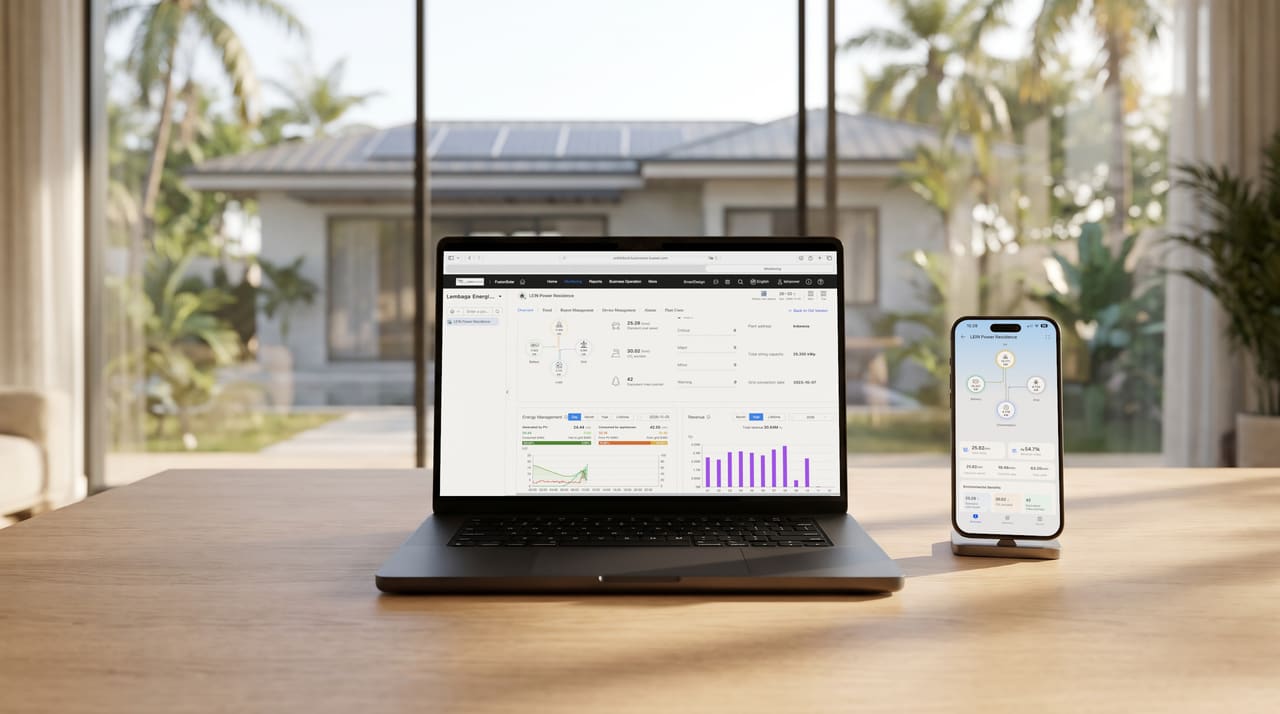
Solar production
What the panels produce, through the day and over the months.
Home use
What your home uses, and when it uses it.
Battery charge
How full the battery is, ready for the night or a blackout.
Maintenance
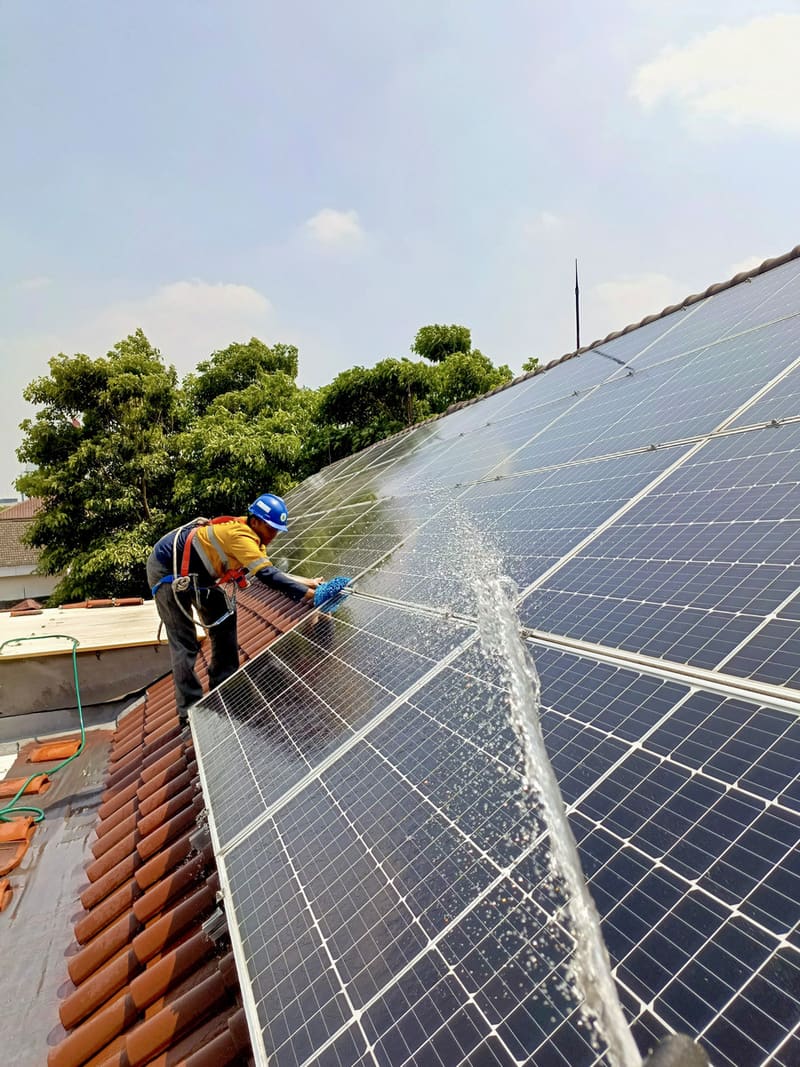
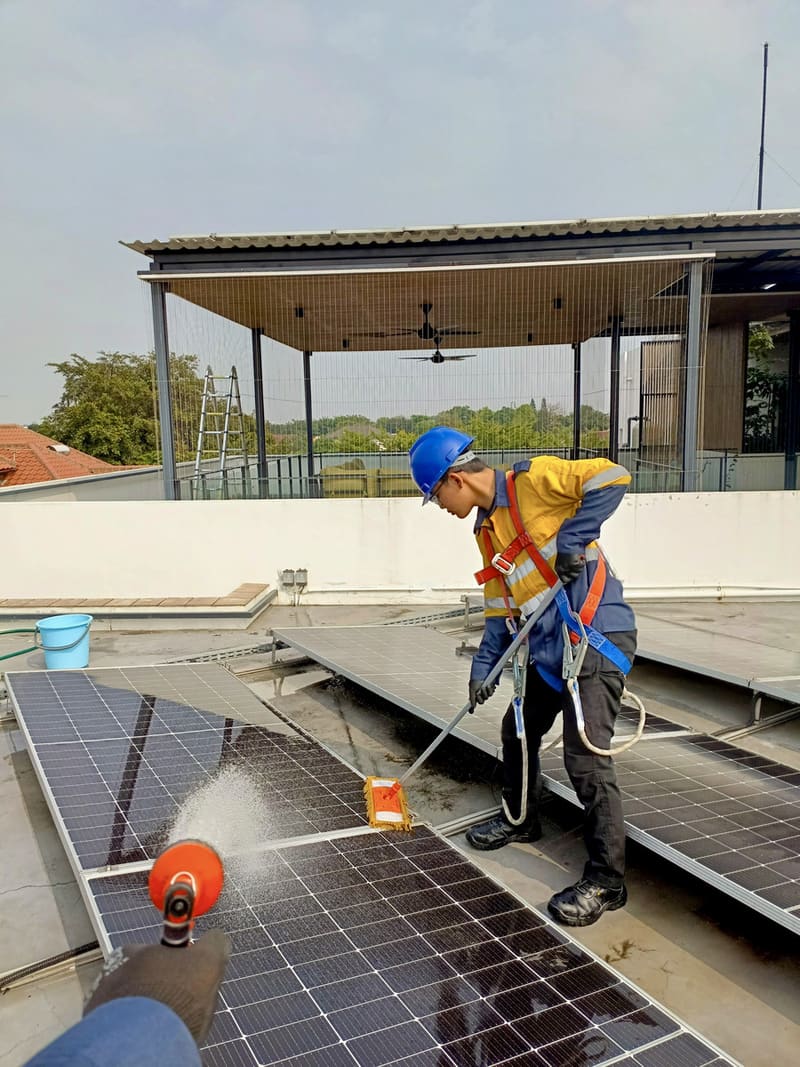
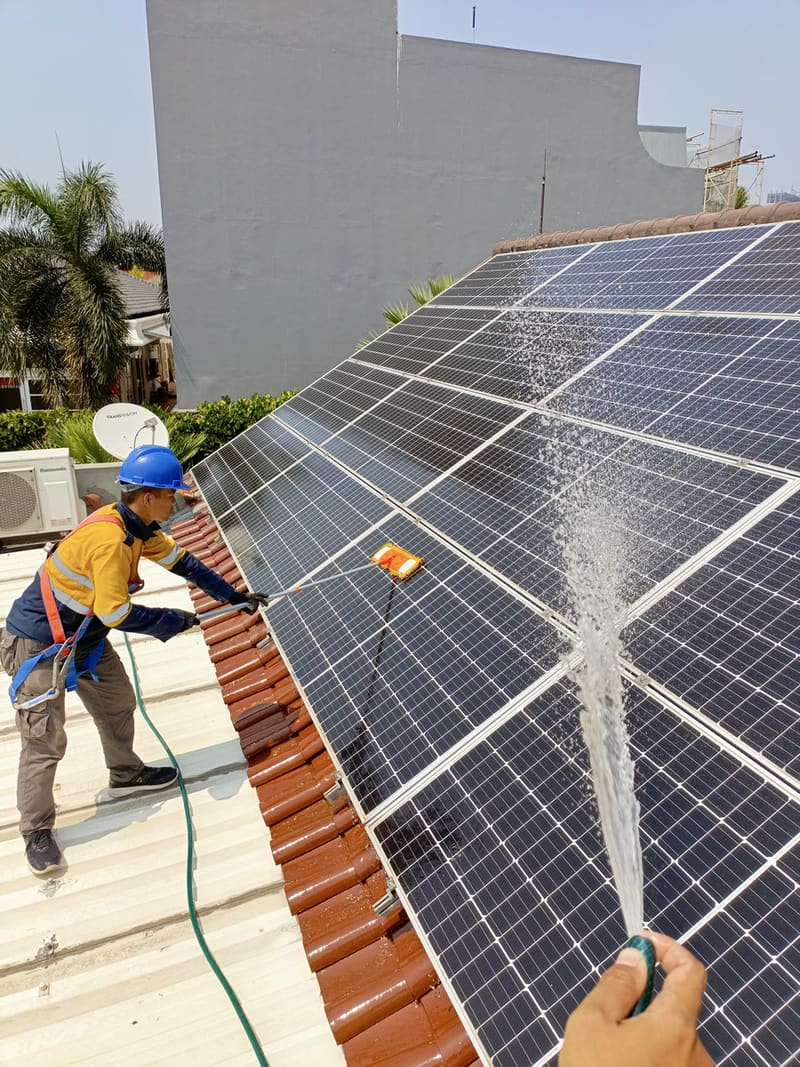
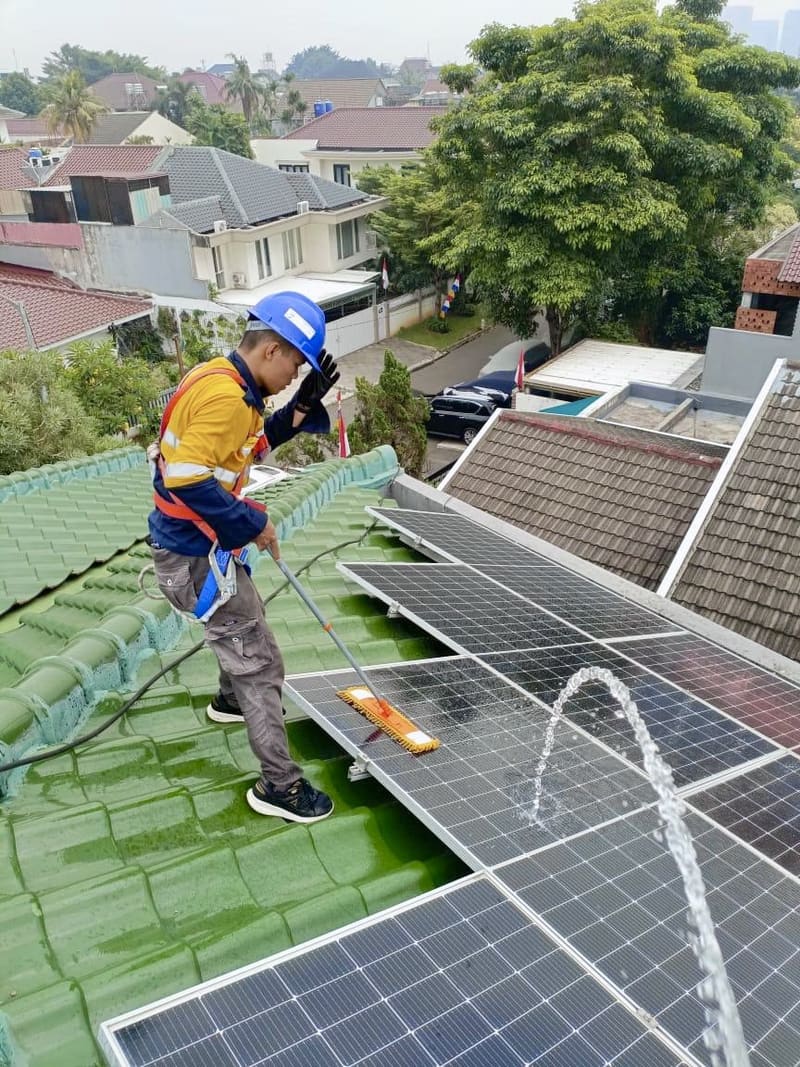
Dust and fallen leaves lower what the panels produce, and every system runs best when it is checked regularly. We provide preventive and corrective maintenance, including panel cleaning.
Your first year, included
- Our team watches the system’s performance and alarms in FusionSolar or Deye Cloud.
- An anomaly, or a system offline for more than 3 days, is followed up within 24 hours on working days.
- One free cleaning and inspection in the 11th month, or earlier if something goes wrong.
From the second year
LEIN Care Plan
Clean panels and steady output: twice a year, on a schedule, our own team comes to your roof to clean the panels and check the whole system.
- Done by solar specialists
Panel glass has an anti-reflective coating, and the roof carries live DC cables. Our own technicians, who know the equipment we installed, do the work in hard hats and safety harnesses.
- Cleaned the right way
Long-handled mops and plain water lift dust, leaves and bird droppings without scratching the coated glass, so sunlight reaches the cells again.
- A cost you know in advance
The annual fee for your system is agreed and paid upfront, so the two scheduled visits bring no extra charges.
One-off visit
A single visit whenever you need it, with panel cleaning and a full system check.
Every visit includes
- Panel cleaning
- A visual check of the panels, mounting and roof fixing points
- An electrical check of cables, connectors and protection devices
- An inverter and battery check, including alerts in the monitoring app
- A report on the system’s condition
When something is wrong. If output drops or the app shows an alert, we find the cause and fix it, and handle warranty claims with the manufacturer.
Without the LEIN Care Plan, we still support your warranty claims, but technician visits are charged. The price depends on the size of your system.
Ask About Maintenance (opens another website)Our residential projects.
Browse the rooftop solar systems LEIN Power has designed and built for homes.
Residential 13 featured projects
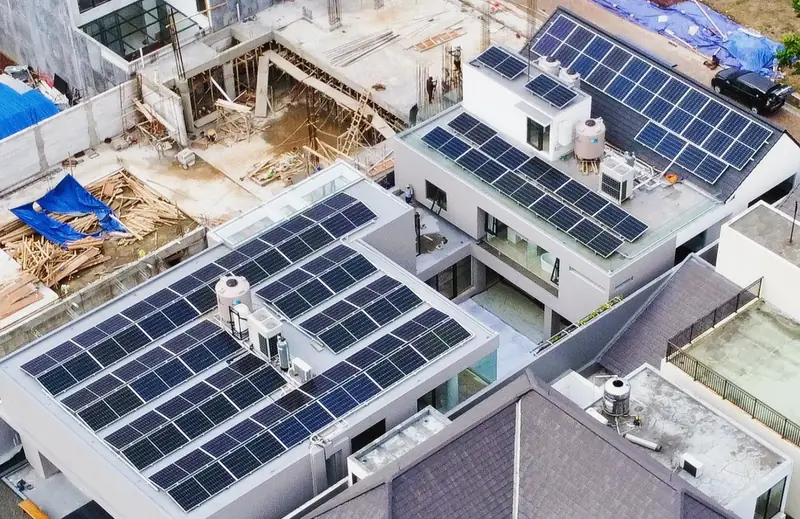
Bukit Menteng · Bintaro · South Tangerang39 kWp + 90 kWh battery 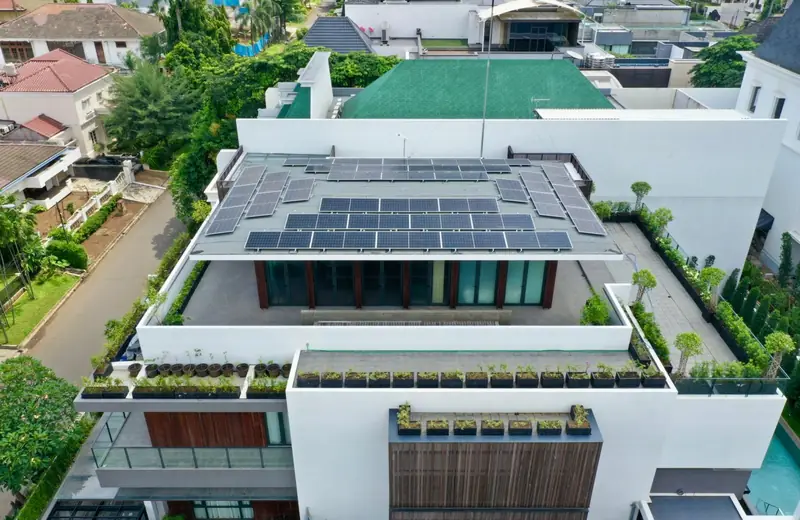
Bukit Hijau IX · Pondok Indah · Jakarta22.86 kWp 
Mandar · Bintaro · South Tangerang7.74 kWp + 15 kWh battery 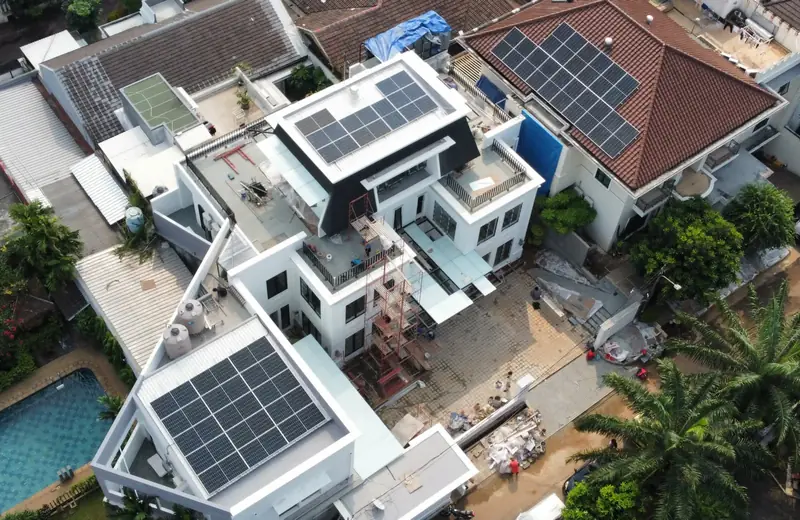
Menteng Dalam · Jakarta23 kWp 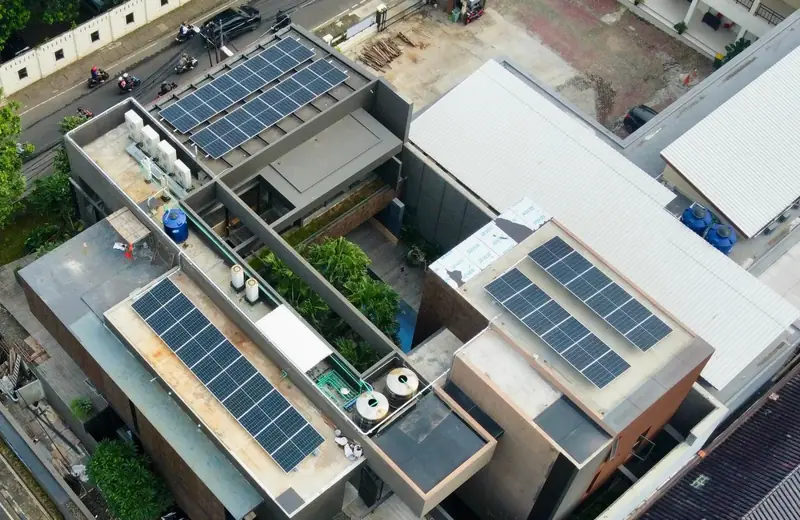
Pasar Minggu · Jakarta22.4 kWp 
Gandaria · Jakarta13.08 kWp 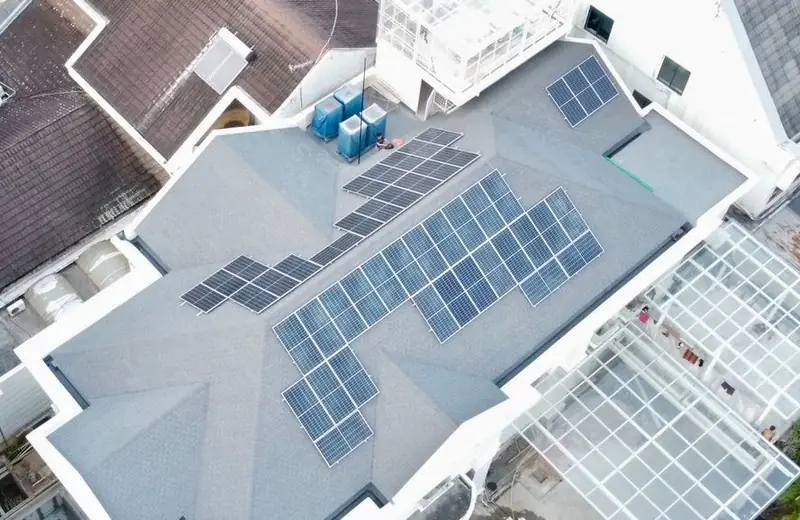
Menteng · Jakarta27.3 kWp 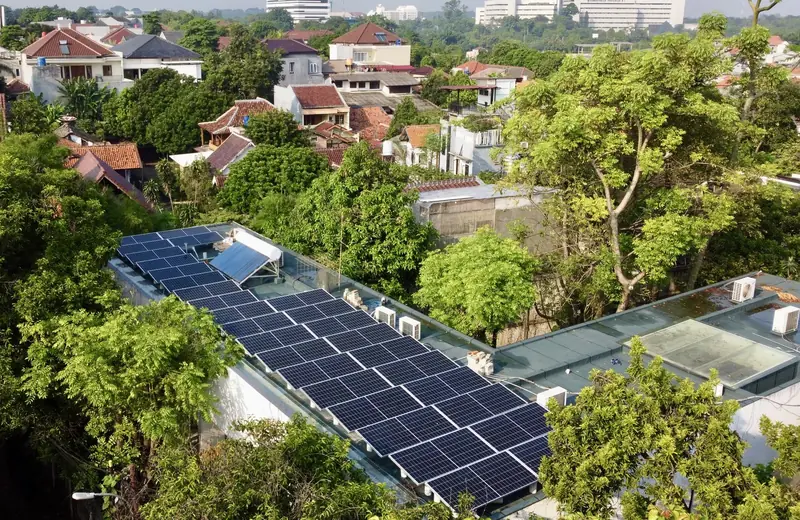
Tanah Teduh · Pasar Minggu · Jakarta13.5 kWp + 25 kWh battery 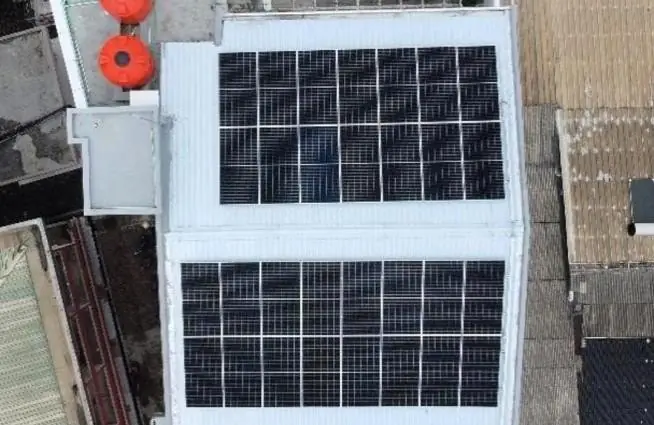
Pluit · Jakarta16.2 kWp 
Pelangi Jingga · Sunter · Jakarta9.1 kWp 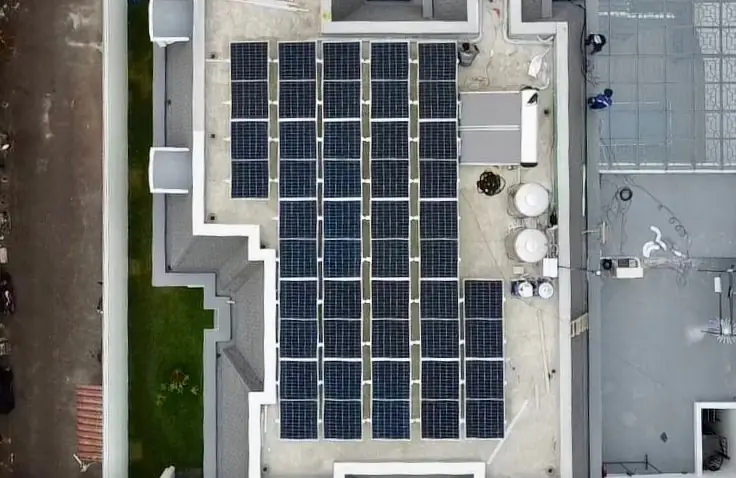
Pejaten · Jakarta13.2 kWp 
Bukit Hijau IV · Pondok Indah · Jakarta24 kWp 
Kertanegara · Kebayoran Baru · Jakarta19.6 kWp
Questions homeowners ask.
Before you start
Can I sell excess power to PLN?
No. Since Minister of Energy and Mineral Resources Regulation No. 2 of 2024, power exported to PLN no longer reduces the bill. That is why we size systems to your daytime use and store the midday surplus in a battery, or set the inverter to zero export on an on-grid system.
Why do you need my PLN bills?
Your PLN bills show how much power your home uses and on which connection. Since Minister of Energy and Mineral Resources Regulation No. 2 of 2024, power exported to PLN no longer reduces the bill. That is why we size the system to your use rather than to your roof, with the same hourly energy model as our calculator.
What happens on cloudy or rainy days?
The panels still produce, only less. On a hybrid or on-grid system, PLN covers the shortfall automatically. On an off-grid system the battery covers it, and the diesel genset starts after a long overcast spell.
Where do you install home systems?
In Java and Bali. If your home is elsewhere, contact us on WhatsApp and we will tell you what is possible.
Battery and backup
Can the air conditioner run during a blackout?
Yes, if it is on the backup circuit. How many can run at once depends on the maximum backup power, which is set by the inverter and the battery’s power modules, not by the panels: a 12 kWp roof does not mean 12 kW of backup. Air conditioners also draw a burst of power as they start, which we check in your design. In the calculator, tick the air conditioners and other appliances you want on backup, and it shows your maximum backup power and how long they run.
Where is the battery installed?
Usually in the garage, the carport or a utility room, close to the inverter and the backup box: a dry, shaded and ventilated spot, out of direct sun and rain, with the clearances the manufacturer’s manual requires. We choose the spot with you during the site visit.
What is the difference between AC coupling and DC coupling?
Both store solar power in a battery. With DC coupling, the panels and the battery share one hybrid inverter, so the panels charge the battery directly; it suits new hybrid systems. With AC coupling, the battery has its own inverter, connected to the home’s wiring next to an existing on-grid inverter; it suits adding a battery to a system that is already running, because the inverter you have stays.
Can I add a battery to my existing on-grid system?
Yes. We survey the system first, then in most cases add the battery by AC coupling, so your inverter stays. If your system was approved before the 2024 regulation, we also check how the change affects its export-import scheme, which stays valid for 10 years from PLN’s approval.
Roof and installation
Is my roof suitable for solar?
We check it on every survey: the site visit covers the roof, its type and condition, and your distribution board. We mount on clay and concrete tiles, asphalt shingles, metal roofs and concrete decks, each with its own method. Cracked tiles or leaks are best repaired before the panels go on.
Will the roof leak?
Each roof has its own mounting method. On clay or concrete tiles, the hooks are fixed to the rafters and the tiles are refitted over them without drilling. On metal and asphalt shingle roofs, every fixing point is sealed. On a concrete deck, ballast frames need no drilling at all.
Which permits are needed?
Your system needs PLN approval and an operating certificate (SLO). We prepare the technical documents and support you through both until your system is officially running. PLN approval follows the rooftop solar quota for your area and PLN’s application periods, so it can take longer when the quota is full.
After installation
How do I know my system is working?
The monitoring app shows what the panels produce, what your home uses and the battery charge, and it shows an alert when something is wrong. In the first year, our team also watches your system’s performance and alarms, and follows up an anomaly, or a system offline for more than 3 days, within 24 hours on working days.
What warranty do I get?
Manufacturer warranties on the equipment, a 1-year LEIN workmanship warranty, 10 years on the mounting structure, and free support with warranty claims. The exact models and terms are in your proposal.
Does the system need maintenance?
Dust on the panels lowers output, and the system should be checked from time to time. In the first year, monitoring and one cleaning and inspection are included. From the second year, choose the LEIN Care Plan, our annual plan of two scheduled visits with the fee paid upfront, or a one-off visit; both include panel cleaning. If something goes wrong, we find the cause and fix it.
What happens to the system if I sell the house?
The panels, inverter and battery are fixed to the house and wired into its distribution board, so they normally stay with the house. Let us know before the handover, and we will help the new owner take over the monitoring app account.
Ready to make the switch?
Start with the calculator for a first estimate, or talk to our team on WhatsApp.